Options for Teaching
There are 56 products in Options for Teaching
Teaching Literature and Other Arts
Focusing primarily on undergraduate teaching, this collection of eighteen pioneering essays describes courses interweaving literature with music and the visual arts. Each essay is supplemented by a syllabus of the course; an appendix offers six additional syllabi.
Teaching Literature in the Online Classroom
This volume considers the challenges and opportunities of online literature classes and suggests instructional strategies that ensure students are engaged in the virtual classroom. The ideas shared here are grounded in research, practice, critical self-reflection, and collaboration. Reflecting a diverse collection of practical tips and experiences from colleagues teaching at a variety of institutions, the essays offer readers the chance to inhabit others' classrooms. Contributors discuss building an interactive and inclusive classroom and using hypertext, video lectures, and other asynchronous and synchronous tools in classes whose subjects include, among others, Shakespeare, the Chinese novel, early American literature, speculative fiction, and contemporary American poetry.
Teaching the Literatures of Early America
In this era of shifting geopolitical boundaries, numerous books and articles question what “American” literature is, what “the literary” is, and how what is called early American literature can best be taught. This fifteenth volume of the MLA series Options for Teaching examines these issues and offers approaches and methods to help teachers and their students reconceptualize early American literatures as a complex body of multifaceted works rather than as merely an offshoot of British culture or a putatively American past.
Part 1 consists of both multidisciplinary approaches and more narrowly framed investigations. Some essays discuss the rewards of teaching early American materials from groups not considered dominant—Native Americans, African Americans, women, French and Spanish colonials. Others treat English and Anglo-American writings, including those of the Puritans, the Federalists and Anti-Federalists, and American Enlightenment thinkers. Four essays on genre studies focus on early poetry, fiction, drama, autobiography, and captivity narratives.
In part 2, five teachers describe courses they have taught and give detailed syllabi. Completing the book is a bibliographic essay that reviews existing literature in the areas covered and provides a quick survey of secondary materials.
Designed for teachers at the undergraduate and graduate levels, Teaching the Literatures of Early America shows the rigorous, invigorating, and innovative ways in which scholars and teachers have been addressing the richness and variety of early materials.
Teaching the Literatures of the American Civil War
When Abraham Lincoln met Harriet Beecher Stowe in 1863, he reportedly greeted her as “the little woman who wrote the book that started this Great War.” To this day, Uncle Tom’s Cabin serves as a touchstone for the war. Yet few works have been selected to represent the Civil War’s literature, even though historians have filled libraries with books on the war itself.
This volume helps teachers address the following questions: What is the relation of canonical works to the multitude of occasional texts that were penned in response to the Civil War, and how can students understand them together? Should an approach to war literature reflect the chronology of historical events or focus instead on thematic clusters, generic forms, and theoretical concerns? How do we introduce students to archival materials that sometimes support, at other times resist, the close reading practices in which they have been trained?
Twenty-three essays cover such topics as visiting historical sites to teach the literature, using digital materials, teaching with anthologies; soldiers’ dime novels, Confederate women’s diaries, songs, speeches; the conflicted theme of treason, and the double-edged theme of brotherhood; how battlefield photographs synthesize fact and fiction; and the roles in the war played by women, by slaves, and by African American troops. A section of the volume provides a wealth of resources for teachers.
This volume is available for free in these e-book formats:
- MOBI format (Kindle)
- EPUB format (Nook, iPad, Sony Reader, Adobe Digital Editions, and other compatible devices and software)
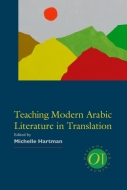
Teaching Modern Arabic Literature in Translation
Understanding the complexities of Arab politics, history, and culture has never been more important for North American readers. Yet even as Arabic literature is increasingly being translated into English, the modern Arabic literary tradition is still often treated as other—controversial, dangerous, difficult, esoteric, or exotic. This volume examines modern Arabic literature in context and introduces creative teaching methods that reveal the literature’s richness, relevance, and power to anglophone students.
Addressing the complications of translation head on, the volume interweaves such important issues such as gender, the Palestinian-Israeli conflict, and the status of Arabic literature in world literature. Essays cover writers from the recent past, like Emile Habiby and Tayeb Salih; contemporary Palestinian, Egyptian, and Syrian literatures; and the literature of the nineteenth-century Nahda.
Honorable Mention in the Idaho State University Teaching Literature Book Award
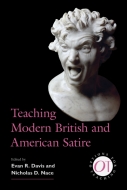
Teaching Modern British and American Satire
This volume addresses the teaching of satire written in English over the past three hundred years. For instructors covering current satire, it suggests ways to enrich students’ understanding of voice, irony, and rhetoric and to explore the questions of how to define satire and how to determine what its ultimate aims are. For instructors teaching older satire, it demonstrates ways to help students gain knowledge of historical context, medium, and audience, while addressing more specific literary questions of technique and form. Readers will discover ways to introduce students to authors such as Swift and Twain, to techniques such as parody and verbal irony, and to the difficult subject of satire’s offensiveness and elitism. This volume also helps teachers of a wide variety of courses, from composition to gateway courses and surveys, think about how to use modern satire in conceiving and structuring them.
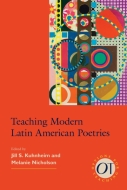
Teaching Modern Latin American Poetries
The essays in this book, groundbreaking for its focus on teaching Latin American poetry, reflect the region’s geographic and cultural heterogeneity. They address works from Mexico, Chile, Peru, Ecuador, Colombia, Cuba, Brazil, Argentina, Guatemala, Nicaragua, and Uruguay, as well as from indigenous communities found within these national distinctions, including the Kaqchikel Maya and Zapotec. The volume’s essays help instructors teach poetry written from the second half of the twentieth century on, meaningfully connecting this contemporary corpus with older poetic traditions. Contributors address teaching various topics, from the silva and the long poem to Afro-descendant poetry, in ways that bring performance, digital approaches, queer theory, and translation into action. The insights found here will demonstrate how Latin American poetry can become a part of classes in African diasporic studies, indigenous studies, history, and anthropology.
Teaching Modernist Women’s Writing in English
As authors and publishers, individuals and collectives, women significantly shaped the modernist movement. While figures such as Virginia Woolf and Gertrude Stein have received acclaim, authors from marginalized communities and those who wrote for mass, middlebrow audiences also created experimental and groundbreaking work. The essays in this volume explore formal aspects and thematic concerns of modernism while also challenging rigid notions of what constitutes literary value as well as the idea of a canon with fixed boundaries.
The essays contextualize modernist women’s writing in the material and political concerns of the early twentieth century and in life on the home front during wartime. They consider the original print contexts of the works and propose fresh digital approaches for courses ranging from high school through graduate school. Suggested assignments provide opportunities for students to write creatively and critically, recover forgotten literary works, and engage with their communities.
Teaching Narrative Theory
The last two decades have seen a burst of renewed interest in narrative theory across many academic disciplines as scholars analyze the power of storytelling in print and other media. Teaching Narrative Theory provides a comprehensive resource for instructors who aim to help students identify and understand the distinctive features of narrativity in a text or discourse and make use of the terms and concepts of the field.
This volume in the Options for Teaching series is organized to assist teachers at different levels of instruction and in different disciplinary settings. In twenty-one essays, the contributors discuss narrative theory’s various teaching contexts (e.g., classes on literature, creative writing, and folklore and ethnography); key concepts and terms (e.g., story and plot, time and space, voice, perspective); applications beyond printed texts (e.g., film and digital media); and impact on other areas of theory (e.g., gender and ethnic studies). A glossary provides a guide to the challenging technical terminology characteristic of the field, and the volume as a whole emphasizes the importance of understanding and implementing technical terms in learning narrative theory.
Teaching Nineteenth-Century American Poetry
Twentieth-century modernism reduced the list of nineteenth-century American poets to Walt Whitman, Emily Dickinson, and (less often) Edgar Allan Poe. The rest were virtually forgotten. This volume in the MLA series Options for Teaching marks a milestone in the resurgence of the study of the rest. It features poets, like Henry Wadsworth Longfellow and Lydia Huntley Sigourney, who were famous in their day, as well as poets who were marginalized on the basis of their race (Paul Laurence Dunbar, Alexander Posey) or their sociopolitical agenda (Emma Lazarus, John Greenleaf Whittier). It also takes a fresh look at poets whose work has been dismissed as sentimental (Frances Osgood), genteel (Oliver Wendell Holmes), or didactic (William Cullen Bryant).
The volume’s twenty-two essays are grouped into parts: “Teaching Various Kinds of Poems,” “Teaching Poets in Context,” and “Strategies for Teaching.” The fourth part is a selective guide to the field: an annotated bibliography of editions, anthologies, reference books, biographies, critical studies, and Web resources.
