Options for Teaching
There are 56 products in Options for Teaching
Teaching South Asian Anglophone Diasporic Literature
Migration from the Indian subcontinent began on a large scale over 150 years ago, and today there are diasporic communities around the world. The identities of South Asians in the diaspora are informed by roots in the subcontinent and the complex experiences of race, religion, nation, class, caste, gender, sexuality, language, trauma, and geography. The literature that arises from these roots and experiences is diverse, powerful, and urgent.
Teaching South Asian Anglophone Diasporic Literature embraces an intersectionality that attends to the historical and material conditions of cultural production, the institutional contexts of pedagogy, and the subject positions of teachers and students. Encouraging a deep engagement with works whose personal, political, and cultural insights are specific to South Asian diasporic consciousness, the volume also provokes meaningful reflection on other literatures in an age of increasing migration and diaspora.
Teaching the Literature of Climate Change
Over the past several decades, writers such as Paolo Bacigalupi, Octavia E. Butler, Kathy Jetn̄il-Kijiner, and Margaret Atwood have explored climate change through literature, reflecting current anxieties about humans' impact on the planet. Emphasizing the importance of interdisciplinarity, this volume embraces literature as a means to cultivate students' understanding of the ongoing climate crisis, ethics in times of disaster, and the intrinsic intersectionality of environmental issues.
Contributors discuss speculative climate futures, the Anthropocene, postcolonialism, climate anxiety, and the usefulness of storytelling in engaging with catastrophe. The essays offer approaches to teaching interdisciplinary and cross-listed courses, including strategies for team-teaching across disciplines and for building connections between humanities majors and STEM majors. The volume concludes with essays that explore ways to address grief and to contemplate a hopeful future in the face of apocalyptic predictions.
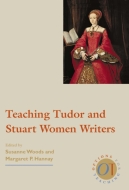
Teaching Tudor and Stuart Women Writers
The increased attention to women’s literature of the early modern period has reinvigorated literary study, not by supplanting the traditional canon but by renewing our interest in it. As the volume editors note, “Teaching Spenser’s The Faerie Queene is a richer experience when one also teaches Wroth’s Urania.”
Teaching Tudor and Stuart Women Writers summarizes the latest scholarship on British women writers who lived from roughly 1500 to 1700 and suggests strategies for presenting their works in the classroom. Thirty-six essays discuss frequently anthologized pieces by such women as Margaret Cavendish, Elizabeth I, Mary Sidney, and Mary Wroth as well as the writings of women who have come to the notice of scholars only recently.
The volume addresses women’s roles in early modern society and women’s limited access to education and opportunities for writing; provides background for understanding literary, religious, historical, and social texts; gives biographies of certain writers; lists texts suitable for presentation in the undergraduate classroom; suggests models for lower-level surveys as well as semester-length graduate seminars; and details the availability of primary sources.
Teaching World Epics
Cultures across the globe have embraced epics: stories of memorable deeds by heroic characters whose actions have significant consequences for their lives and their communities. Incorporating narrative elements also found in sacred history, chronicle, saga, legend, romance, myth, folklore, and the novel, epics throughout history have both animated the imagination and encouraged reflection on what it means to be human. Teaching World Epics addresses ancient and more recent epic works from Africa, Europe, Mesoamerica, and East, Central, and South Asia that are available in English translations.
Useful to instructors of literature, peace and conflict studies, transnational studies, women's studies, and religious studies, the essays in this volume focus on epics in sociopolitical and cultural contexts, on the adaptation and reception of epic works, and on themes that are especially relevant today, such as gender dynamics and politics, national identity, colonialism and imperialism, violence, and war.
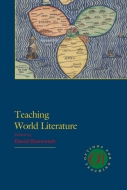
Teaching World Literature
“This is an exciting, and unsettling, time to be teaching world literature,” writes David Damrosch. Because the range of works taught in world literature courses has expanded enormously, both historically and geographically, the task of selection—and of teacher preparation—has grown more challenging. Teachers of this field must grapple with such issues as coverage, cultural difference, and the role of translation in the classroom. Should one emphasize masterpieces or traditions, concepts or themes? How does one avoid making a work bear the burden of representing an entire tradition? To what extent should anthologies be used? Can a course be global in scope and yet focus on a few works, authors, moments?
This collection of thirty-two essays in the MLA series Options for Teaching offers an array of solutions to these challenges, reflecting the wide variety of institutions, courses, and students described by the contributors. An annotated bibliography is provided, with a listing of useful Web sites.
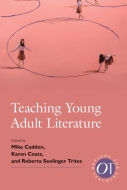
Teaching Young Adult Literature
Thanks to the success of franchises such as The Hunger Games and Twilight, young adult literature has reached a new level of prominence and popularity. Teens and adults alike are drawn to the genre’s coming-of-age themes, fast pacing, and vivid emotional portrayals. The essays in this volume suggest ways high school and college instructors can incorporate YA texts into courses in literature, education, library science, and general education.
The first group of essays explores key issues in YA literature, situates works in cultural contexts, and addresses questions of text selection and censorship. The second section discusses a range of genres within YA literature, including both realistic and speculative fiction as well as verse narratives, comics, and film. The final section offers ideas for assignments, including interdisciplinary and digital projects, in a variety of courses.
