Options for Teaching
There are 56 products in Options for Teaching
Teaching Early Modern English Literature from the Archives
The availability of digital editions of early modern works brings a wealth of exciting archival and primary source materials into the classroom. But electronic archives can be overwhelming and hard to use, for teachers and students alike, and digitization can distort or omit information about texts. Teaching Early Modern English Literature from the Archives places traditional and electronic archives in conversation, outlines practical methods for incorporating them into the undergraduate and graduate curriculum, and addresses the theoretical issues involved in studying them. The volume discusses a range of physical and virtual archives from 1473 to 1700 that are useful in the teaching of early modern literature—both major sources and rich collections that are less known (including affordable or free options for those with limited institutional resources).
Although the volume focuses on English literature and culture, essays discuss a wide range of comparative approaches involving Latin, French, Spanish, German, and early American texts and explain how to incorporate visual materials, ballads, domestic treatises, atlases, music, and historical documents into the teaching of literature.
Honorable Mention in the Idaho State University Teaching Literature Book Award
Teaching Early Modern English Prose
To gain a full understanding of the literature and history of early modern England, students need to study the prose of the period. Aiming to make early modern prose more visible to teachers, this volume approaches prose as a genre that requires as much analysis and attention as the drama and poetry of the time. The essays collected here consider the broad cultural questions raised by prose and explore prose style, showing teachers how to hone students’ writing skills in the process.
Noting that the inclusion of Renaissance prose in anthologies now makes it easier to teach texts discussed in this volume, the introduction considers the practical and historical reasons prose has been taught less often than poetry and drama. The essays call attention to the range of prose writing and to the variety of definitions that have been developed to describe it. In part 1, contributors outline broad issues concerning early modern prose, looking at rhetoric and pamphlet writing and asking how to classify nonfiction. Essays in part 2 discuss particular genres, such as sermons, martyrologies, autobiographies, and Quaker writings. The third part explores specific prose works, including Francis Bacon’s scientific writing, Richard Hooker’s prose, and the transcribed speeches of Queen Elizabeth I. The final part, “Crossings and Pairings,” examines ways to use prose in teaching early modern attitudes toward issues such as education, imperialism, and the translation of the Bible.
Teaching Film
Film studies has been a part of higher education curricula in the United States almost since the development of the medium. Although the study of film is dispersed across a range of academic departments, programs, and scholarly organizations, film studies has come to be recognized as a field in its own right. In an era when teaching and scholarship are increasingly interdisciplinary, film studies continues to expand and thrive, attracting new scholars and fresh ideas, direction, and research.
Given the dynamism of the field, experienced and beginning instructors alike need resources for bringing the study of film into the classroom. This volume will help instructors conceptualize contemporary film studies in pedagogical terms. The first part of the volume features essays on theory and on representation, including gender, race, and sexuality. Contributors then examine the geographies of cinema and offer practical suggestions for structuring courses on national, regional, and transnational film. Several essays focus on interdisciplinary approaches, while others describe courses designed around genre (film noir, the musical), mode (animation, documentary, avant-garde film), or the formal elements of film, such as sound, music, and mise-en-scène. The volume closes with a section on film and media in the digital age, in which contributors discuss the opportunities and challenges presented by access to resources, media convergence, and technological developments in the field.
Teaching Film from the People’s Republic of China
This volume brings a diverse range of voices—from anthropology, communication studies, ethnomusicology, film, history, literature, linguistics, sociology, theater, and urban geography—into the conversation about film from the People's Republic of China. Essays seek to answer what films can reveal or obscure about Chinese history and society and demonstrate how studying films from the PRC can introduce students to larger issues of historical consciousness and media representation.
The volume addresses not only postsocialist fictional films but also a wide variety of other subjects including socialist period films, documentaries, films by or about people from ethnic minority groups, film music, the perspectives of female characters, martial arts cinema, and remakes of South Korean films. By exploring how films represent power, traditions, and ideologies, students learn about both the complexity of the PRC and the importance of cross-cultural and cross-ideological understanding.
Teaching French Neoclassical Tragedy
Tragedy has been reborn many times since antiquity. Seventeenth-century French playwrights composed tragedies marked by neoclassical aesthetics and the divine-right absolutism of the Grand Siècle. But their works also speak to the modern imagination, inspiring reactions from Barthes, Derrida, and Foucault; adaptations and reworkings by Césaire and Kushner; and new productions by francophone and anglophone directors.
This volume addresses both the history of French neoclassical tragedy—its audiences, performance practice, and development as a genre—and the ideas these works raise, such as necessity, free will, desire, power, and moral behavior in the face of limited choices. Essays demonstrate ways to teach the plays through a variety of lenses, such as performance, spectatorship, aesthetics, rhetoric, and affect. The book also explores postcolonial engagement, by writers and directors both in and outside France, with these works.
Teaching French Women Writers of the Renaissance and Reformation
Teaching French Women Writers of the Renaissance and Reformation considers the issues critical to teaching recently rediscovered writers, such as Hélisenne de Crenne, Pernette Du Guillet, and Louise Labé, who have enriched the literary canon by offering alternative perspectives on the social, political, and religious issues of early modern France. Addressing topics from law and medicine to motherhood and aesthetics, these women wrote in nearly every genre, and their works include several literary firsts: the first book of Christian emblems ever published by a woman (Georgette de Montenay), the first published collection of private letters between women in French (the Dames Des Roches), and the first full-length memoir by a woman in French (Margaret of Valois).
The volume considers techniques for reading women’s writing alongside the texts of their male contemporaries and offers guidance on incorporating a range of resources into the classroom. Essays in part 1 explore the background and contexts so crucial for helping students understand how these writers negotiated their entry into the public world of writing. In part 2, contributors discuss specific genres. Part 3 describes critical methodologies that are useful in the classroom and demonstrates the benefits of teaching certain pairings of texts and authors. The fourth and final part recommends a range of electronic and print resources.
Teaching the Global Middle Ages
While globalization is a modern phenomenon, premodern people were also interconnected in early forms of globalism, sharing merchandise, technology, languages, and stories over long distances. Looking across civilizations, this volume takes a broad view of the Middle Ages in order to foster new habits of thinking and develop a multilayered, critical sense of the past.
The essays in this volume reach across disciplinary lines to bring insights from music, theater, religion, ecology, museums, and the history of disease into the literature classroom. The contributors provide guidance on texts such as the Thousand and One Nights, Sunjata, Benjamin of Tudela's Book of Travels, and the Malay Annals and on topics such as hotels, maps, and camels. They propose syllabus recommendations, present numerous digital resources, and offer engaging class activities and discussion questions. Ultimately, they provide tools that will help students evaluate popular representations of the Middle Ages and engage with the dynamics of past, present, and future world relationships.
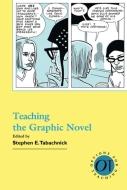
Teaching the Graphic Novel
Graphic novels are now appearing in a great variety of courses: composition, literature, drama, popular culture, travel, art, translation. The thirty-four essays in this volume explore issues that the new art form has posed for teachers at the university level. Among the subjects addressed are
- terminology (graphic narrative vs. sequential art, comics vs. comix)
- the three outstanding comics-producing cultures today: the American, the Japanese (manga), and the Franco-Belgian (the bande dessinée)
- the differences between the techniques of graphic narrative and prose narrative,and between the reading patterns for each
- the connections between the graphic novel and film
- the lives of the new genre’s practitioners (e.g., Robert Crumb, Harvey Pekar)
- women’s contributions to the field (e.g., Lynda Barry)
- how the graphic novel has been used to probe difficult moments in history (the Holocaust, 9/11), deal with social and racial injustice, and voice political satire
- postmodernism in the graphic novel (e.g., in the work of Chris Ware)
- how the American superhero developed in the Depression and World War II
- comix and the 1960s counterculture
- the challenges of teaching graphic novels that contain violence and sexual content
The volume concludes with a selected bibliography of the graphic novel and sequential art.
Teaching the History of the English Language
The study of the history of the English language (HEL) encompasses a broad sweep of time and space, reaching back to the fifth century and around the globe. Further, the language has always varied from place to place and continues to evolve today. Instructors face the challenge of fitting this vast subject into one semester of study and the challenge of engaging students with unfamiliar material and techniques. This volume guides instructors in choosing among many possibilities to design an HEL course to match their own interests and institutions.
The essays consider what subjects of HEL to include, how to organize the course, and what textbook to assign. They offer historical approaches and those that are not structured by chronology. Sample assignments provide opportunities for students to conduct original research, work with archives and digital resources, and investigate language in their communities. The essays also help them question notions of linguistic correctness.
Teaching Human Rights in Literary and Cultural Studies
Since the adoption of the Universal Declaration of Human Rights of 1948, the discourse of human rights has expanded to include not just civil and political rights but also economic, social, cultural, and, most recently, collective rights. Given their broad scope, human rights issues are useful touchstones in the humanities classroom and benefit from an interdisciplinary and cross-cultural pedagogy in which objects of study are situated in historical, legal, philosophical, literary, and rhetorical contexts. Teaching Human Rights in Literary and Cultural Studies is a sourcebook of inventive approaches and best practices for teachers looking to make human rights the focus of their undergraduate and graduate courses.
Contributors first explore what it means to be human and conceptual issues such as law and the state. Next, they approach human rights and related social-justice issues from the perspectives of particular geographic regions and historical eras, through the lens of genre, and in relation to specific rights violations—for example, storytelling and testimonio in Latin America or poetry created in the aftermath of the Armenian genocide. Essays then describe efforts to cultivate students’ capacity for ethical reading practices and to deepen their understanding of the stakes and artistic dimensions of human rights representations, drawing on active learning and experimental class contexts. The final section, on resources, directs readers to further readings in history, criticism, theory, and literary and visual studies and provides a chronology of human rights legal documents.
