2017 Presidential Theme: Boundary Conditions
The presidential theme of the 2017 MLA convention is Boundary Conditions, which I hope will generate a network of lively conversations at our meeting in Philadelphia, as presidential themes are intended to do.
Boundary conditions are, for mathematicians, the parameters that define the space within which one seeks solutions. Our work lends itself to this idea too, for all scholarship takes place in conditions that constrain and enable its significance. These boundary conditions can be intellectual or institutional; they can be national or notional. This year’s theme should, first of all, be taken as an invitation to reflect together on these conditions: Are there questions we have put aside because they are outside our current parameters, conceptual or material? Can reflection on these parameters generate new questions or undermine the presuppositions of existing scholarship? When should we seek to redefine the parameters that constrain and enable our work?
No serious scholar would ever have denied that literature and the other representational arts live across ethnoterritorial lines. And yet traditions of scholarship developed that were startlingly indifferent to that reality. Over the past half century or so, students of literature around the globe have increasingly recognized that our work, like everything it studies, must cross boundaries. We have revised the boundary conditions that determine the space within which we explore the workings of the many interpretable objects that criticism and theory encompass. At the same time, the boundary between criticism and composition has become more permeable.
Most MLA members are teachers, preparing their students to be critical readers and persuasive writers and speakers, helping them to make better sense of the cultural materials in which we are all embedded. Compositional pedagogy, like all pedagogy, is enabled by history and theory—in this case, particularly, the history and theory of rhetoric. And, of course, all pedagogy has a politics, in the broadest sense of the term.
Teachers of composition and rhetoric today face increasing pressure—from parents and pupils, from politicians and pundits—to be “practical” (and so to avoid theory) and “balanced” (and so to avoid politics). We face here a question about boundary conditions: Do we need to engage with a public beyond the classroom and communicate what effective pedagogy in composition and rhetoric requires?
Our expanded boundary conditions are sometimes spatial, sometimes identitarian, sometimes disciplinary and subdisciplinary. We have also noticed that boundaries themselves are sites of artistic production and of scholarship. And as students increasingly cross national boundaries, whether virtually or corporeally, we face new questions about composition and critical analysis, second-language pedagogy, translation, and the ideas of global literature and transnational cultural studies.
How do the new boundary conditions that define the space in which we pursue our solutions affect our understanding of the projects of literary and cultural studies? How do emergent forms of communication—online education, digital libraries and archives, the blog and the vlog, hypertext, machine translation, social media, and new tools of textual analysis—reshape the boundary conditions of our work? And how are these boundary conditions affected by the new material circumstances in our universities—the growth of the precariat, challenges from opponents of liberal education, clashing conceptions of freedom of expression?
It’s a formidable challenge, I have discovered, to find a theme for a conference of scholars whose work covers as vast a range as that of our association’s members. This theme will invite reflection on the profession itself, a profession that, in all its shaggy complexity, is the one thing we share. But every member of the MLA knows how to find the figurative in the literal.
To solicit contributions for a convention session that engages with this theme, you may post a call for papers on the MLA Web site through 28 February 2016. Session proposal forms for the 2017 convention will be available online in March.
I will enjoy the unforeseeable ways in which the MLA members gathered in Philadelphia will make of boundary conditions an energizing metaphor.
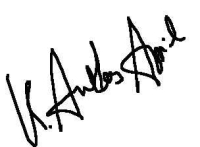
Kwame Anthony Appiah