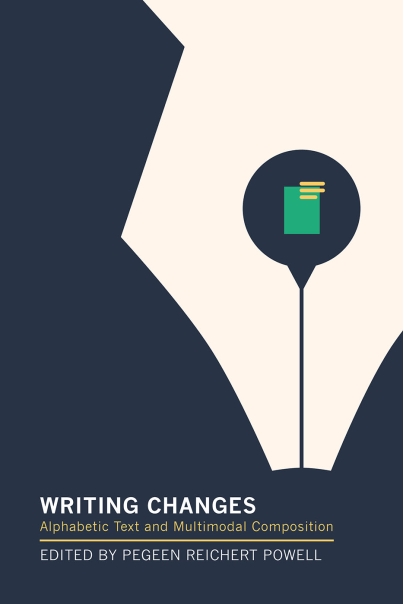
Writing Changes: Alphabetic Text and Multimodal Composition
- Editor: Pegeen Reichert Powell
- Pages: 316
- Published: 2020
- ISBN: 9781603294737 (Hardcover)
- ISBN: 9781603294744 (Paperback)

“This kind of collection on multimodal composition is long overdue.”
—Duane Roen, Arizona State University
Writing Changes moves beyond restrictive thinking about composition to examine writing as a material and social practice rich with contradictions. It analyzes the assumed dichotomy between writing and multimodal composition (which incorporates sounds, images, and gestures) as well as the truism that all texts are multimodal. Organized in four sections, the essays explore
- alphabetic text and multimodal composition in writing studies
- specific pedagogies that place writing in productive conversation with multimodal forms
- current representations of writing and multimodality in textbooks, of instructors’ attitudes toward social media, and of writing programs
- ideas about writing studies as a discipline in the light of new communication practices
Bookending the essays are an introduction that frames the collection and establishes key terms and concepts and an epilogue that both sums up and complicates the ideas in the essays.
Introduction: Writing Changes: Beyond the Binary of Writing versus Multimodality (1)
Part One: Modality as Social Practice
Modality as Social Practice in Written Language (21)
Something Borrowed, Something New: Multimodal Composition through the Reclamation of Vernacular Literacies (41)
Beyond Page Design: Writing as Multimodal Embodied Meaning (62)
Translating Modalities: Interactions between Digital and Alphabetic Modes in Professional Translation Work (83)
Part Two: Modality in Texts and in the Classroom
The Places of Writing on the Multimodal Page (103)
The Essay as Form in a Digital Age (123)
Styling the Multimodal Classroom: Addressing the Labor of Assessment through the Rhetorical Lexicon of Style (138)
Search Engine Optimization and Its Significance for Alphabetic Composing in Writing Pedagogy (155)
Of Writing and the Future: Augmented Reality Composition (177)
Part Three: Modality and Writing Program Administration
Positioning Writing: An Analysis of Textbook Arguments about Multimodality (197)
Facebook Posts, Twitter Hashtags, and Snapchat Stories: Changing Conceptions of Writing in a Social Media Landscape (218)
The Coastal Composition Commons: Considering Flexibility, Delivery, and Valuation in a Badging Initiative (237)
Making the Case: Implementing Multimodality in Undergraduate Major Programs in Writing and Rhetoric (253)
Part Four: Modality and Disciplinarity
Following Directions, Responding to Shifts, Shaking Foundations: Multimodal Composition within and across Writing Programs (273)
Reclaiming Composition: A Twenty-First-Century Interdisciplinary Imperative (290)
Epilogue (304)
Notes on Contributors (313)
“I am excited by the contribution this volume makes to what we know, think, and teach about multimodality and to the relation between alphabetic text and multimodal forms of communication.”
—Neal Lerner
Northeastern University
