Options for Teaching
There are 56 products in Options for Teaching
Teaching Contemporary Theory to Undergraduates
Teaching Contemporary Theory to Undergraduates shows readers how theory can, in the words of William E. Cain, enable teachers and students “to illuminate anew the structure of texts, to write literary and cultural history with greater richness and depth, and to understand social and institutional relations more intricately.”
In twenty-one refreshingly readable essays, contributors discuss their techniques for introducing theory to students in classes on a range of levels. They describe how they overcame initial apprehensions about teaching theory to undergraduates and enumerate the ways that theory enriched both their and their students’ experiences. The theoretical methodologies covered include feminism, poststructuralism, deconstruction, African American criticism, new historicism, cultural studies, and film theory.
Intended for teachers who already use theory in their courses as well as for those who are teaching theory for the first time, the volume offers history, analysis, and practical advice.

Teaching Children’s Literature
The thirteen essays that make up the first part of Teaching Children’s Literature highlight issues of canon, pedagogy, genre, and period. In part 2, fifteen course descriptions by experienced teachers offer a wealth of information on undergraduate courses, specific approaches to children’s literature, and workshops and graduate-level seminars. The remaining parts of the volume examine selected advanced programs of study throughout the United States and supply a variety of sources, including an extensive bibliography. The book concludes with a lively dialogue among Maurice Sendak, Dr. Seuss, and the volume editor.
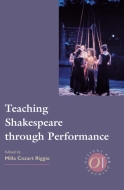
Teaching Shakespeare through Performance
Performance pedagogy does more than involve students in the acting, directing, and production work needed to bring a play text to life. It engages them in interpretation; it makes issues of structure or subtext immediate; it deepens understanding of stage history; in film, it demonstrates the role of camera, lighting, sound.
Teaching Shakespeare through Performance is designed for teachers of both high school and college English courses who wish to introduce performance strategies into their classroom. The volume illustrates how attention to theatrical detail can give insight into Shakespeare’s work and world: the significance of an omitted exit or entrance, the role of stage directions in King Lear, costumes and transvestism on the Renaissance stage, the changing fashions of acting Juliet, how experimenting with the use of different personal props in a scene from Hamlet reveals cultural attitudes, and much more.
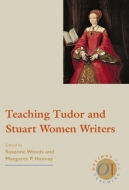
Teaching Tudor and Stuart Women Writers
The increased attention to women’s literature of the early modern period has reinvigorated literary study, not by supplanting the traditional canon but by renewing our interest in it. As the volume editors note, “Teaching Spenser’s The Faerie Queene is a richer experience when one also teaches Wroth’s Urania.”
Teaching Tudor and Stuart Women Writers summarizes the latest scholarship on British women writers who lived from roughly 1500 to 1700 and suggests strategies for presenting their works in the classroom. Thirty-six essays discuss frequently anthologized pieces by such women as Margaret Cavendish, Elizabeth I, Mary Sidney, and Mary Wroth as well as the writings of women who have come to the notice of scholars only recently.
The volume addresses women’s roles in early modern society and women’s limited access to education and opportunities for writing; provides background for understanding literary, religious, historical, and social texts; gives biographies of certain writers; lists texts suitable for presentation in the undergraduate classroom; suggests models for lower-level surveys as well as semester-length graduate seminars; and details the availability of primary sources.
Teaching Literature and Medicine
Courses in literature and medicine flourish in undergraduate, medical school, and continuing-education programs throughout the United States and Canada. This volume presents a variety of approaches to the subject. It is intended both for literary scholars and for physicians who teach literature and medicine or who are interested in interdisciplinary breadth.
The essays describe model courses; list readings widely taught in literature and medicine courses; discuss the value of texts in both medical education and the practice of medicine; and provide bibliographic resources, including works in the history of medicine from classical antiquity.
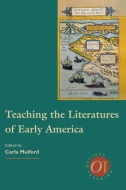
Teaching the Literatures of Early America
In this era of shifting geopolitical boundaries, numerous books and articles question what “American” literature is, what “the literary” is, and how what is called early American literature can best be taught. This fifteenth volume of the MLA series Options for Teaching examines these issues and offers approaches and methods to help teachers and their students reconceptualize early American literatures as a complex body of multifaceted works rather than as merely an offshoot of British culture or a putatively American past.
Part 1 consists of both multidisciplinary approaches and more narrowly framed investigations. Some essays discuss the rewards of teaching early American materials from groups not considered dominant—Native Americans, African Americans, women, French and Spanish colonials. Others treat English and Anglo-American writings, including those of the Puritans, the Federalists and Anti-Federalists, and American Enlightenment thinkers. Four essays on genre studies focus on early poetry, fiction, drama, autobiography, and captivity narratives.
In part 2, five teachers describe courses they have taught and give detailed syllabi. Completing the book is a bibliographic essay that reviews existing literature in the areas covered and provides a quick survey of secondary materials.
Designed for teachers at the undergraduate and graduate levels, Teaching the Literatures of Early America shows the rigorous, invigorating, and innovative ways in which scholars and teachers have been addressing the richness and variety of early materials.
