Options for Teaching
There are 56 products in Options for Teaching
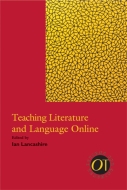
Teaching Literature and Language Online
Educators today teach in a range of formats, from traditional face-to-face courses to Web-assisted courses in physical classrooms to entirely online courses in which the teacher and students never meet in person. The pressure to integrate teaching with information technology is strong, and more and more educational institutions are offering blended courses and distance-education learning options.
The essays in this collection illuminate the realities of teaching language and literature courses online. Contributors present snapshots of their experiences with online pedagogies, realizing that, just as this year’s technology writes over last year’s, the approaches and teaching tools they have pioneered will also be obscured by future innovations. At the same time, the volume describes models that first-time teachers of online courses will find useful and provides extensive insights into online education for those who are experienced in teaching blended and open-source courses.
The volume begins with an overview of online education in the fields of literature and language and then offers case studies of particular technologies used in specific courses. Subjects extend from Old English and ancient world literature to Shakespeare and modern poetry, and languages include Aymara, Chinese, English as a second language, French, German, Italian, Japanese, and Spanish. Contributors describe using multimedia Web sites, cyberplay and gaming, bulletin boards, chat rooms, blogs, wikis, natural language processing, podcasting, course management systems, annotated electronic editions, text-analysis tools, and open-source applications. They show that online pedagogies often have surprising capabilities—such as transforming a Web-based environment into an intimate social community spanning institutions and oceans, saving endangered languages, and rescuing isolated communities and individuals who have no other educational lifeline.
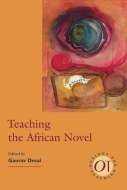
Teaching the African Novel
What is the African novel, and how should it be taught?
The twenty-three essays of this volume address these two questions and in the process convey a wealth of information and ideas about the diverse regions, peoples, nations, languages, and writers of the African continent. Topics include
- Ngũgĩ wa Thiong’o’s favoring of indigenous languages and literary traditions over European
- the special place of Marxism in African letters
- the influence of Frantz Fanon
- women writers and the sub-Saharan novel
- the Maghrebian novel
- the novel and the griot epic in the Sahel
- Islam in the West African novel
- novels in Spanish from Equatorial Guinea
- apartheid and postapartheid fiction
- African writers in the diaspora
- globalization in East African fiction
- teaching Chinua Achebe’s Things Fall Apart to students in different countries
- the Onitsha market romance
The volume editor, Gaurav Desai, writes, “The point of the volume is to encourage a reading of Africa that is sensitive to its history of colonization but at the same time responsive to its present multiracial and multicultural condition.”
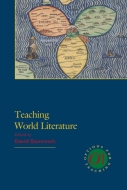
Teaching World Literature
“This is an exciting, and unsettling, time to be teaching world literature,” writes David Damrosch. Because the range of works taught in world literature courses has expanded enormously, both historically and geographically, the task of selection—and of teacher preparation—has grown more challenging. Teachers of this field must grapple with such issues as coverage, cultural difference, and the role of translation in the classroom. Should one emphasize masterpieces or traditions, concepts or themes? How does one avoid making a work bear the burden of representing an entire tradition? To what extent should anthologies be used? Can a course be global in scope and yet focus on a few works, authors, moments?
This collection of thirty-two essays in the MLA series Options for Teaching offers an array of solutions to these challenges, reflecting the wide variety of institutions, courses, and students described by the contributors. An annotated bibliography is provided, with a listing of useful Web sites.
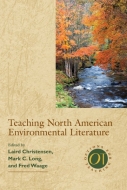
Teaching North American Environmental Literature
From stories about Los Angeles freeways to slave narratives to science fiction, environmental literature encompasses more than nature writing. The study of environmental narrative has flourished since the MLA published Teaching Environmental Literature in 1985. Today, writers evince a self-consciousness about writing in the genre, teachers have incorporated field study into courses, technology has opened up classroom possibilities, and institutions have developed to support study of this vital body of writing. The challenge for instructors is to identify core texts while maintaining the field’s dynamic, open qualities.
The essays in this volume focus on North American environmental writing, presenting teachers with background on environmental justice issues, ecocriticism, and ecofeminism. Contributors consider the various disciplines that have shaped the field, including African American, American Indian, Canadian, and Chicana/o literature. The interdisciplinary approaches recommended treat the theme of predators in literature, ecology and ethics, conservation, and film. A focus on place-based literature explores how students can physically engage with the environment as they study literature. The volume closes with an annotated resource guide organized by subject matter.
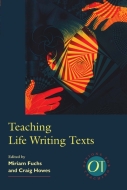
Teaching Life Writing Texts
The past thirty years have witnessed a rapid growth in the number and variety of courses and programs that study life writing from literary, philosophical, psychological, and cultural perspectives. The field has evolved from the traditional approach that biographies and autobiographies were always about prominent people—historically significant persons, the nobility, celebrities, writers—to the conception of life writing as a genre of interrogation and revelation. The texts now studied include memoirs, testimonios, diaries, oral histories, genealogies, and group biographies and extend to resources in the visual and plastic arts, in films and videos, and on the Internet. Today the tensions between canonical and emergent life writing texts, between the famous and the formerly unrepresented, are making the study of biography and autobiography a far more nuanced and multifarious activity.
This volume in the MLA series Options for Teaching builds on and complements earlier work on pedagogical issues in life writing studies. Over forty contributors from a broad range of educational institutions describe courses for every level of postsecondary instruction. Some writers draw heavily on literary and cultural theory; others share their assignments and weekly syllabi. Many essays grapple with texts that represent disability, illness, abuse, and depression; ethnic, sexual and racial discrimination; crises and catastrophes; witnessing and testimonials; human rights violations; and genocide. The classes described are taught in humanities, cultural studies, social science, and language departments and are located in, among other countries, the United States, Great Britain, Canada, Australia, Germany, Eritrea, and South Africa.
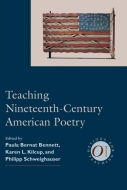
Teaching Nineteenth-Century American Poetry
Twentieth-century modernism reduced the list of nineteenth-century American poets to Walt Whitman, Emily Dickinson, and (less often) Edgar Allan Poe. The rest were virtually forgotten. This volume in the MLA series Options for Teaching marks a milestone in the resurgence of the study of the rest. It features poets, like Henry Wadsworth Longfellow and Lydia Huntley Sigourney, who were famous in their day, as well as poets who were marginalized on the basis of their race (Paul Laurence Dunbar, Alexander Posey) or their sociopolitical agenda (Emma Lazarus, John Greenleaf Whittier). It also takes a fresh look at poets whose work has been dismissed as sentimental (Frances Osgood), genteel (Oliver Wendell Holmes), or didactic (William Cullen Bryant).
The volume’s twenty-two essays are grouped into parts: “Teaching Various Kinds of Poems,” “Teaching Poets in Context,” and “Strategies for Teaching.” The fourth part is a selective guide to the field: an annotated bibliography of editions, anthologies, reference books, biographies, critical studies, and Web resources.
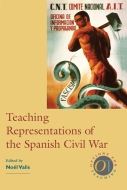
Teaching Representations of the Spanish Civil War
The Spanish Civil War (1936–39), a national conflict with international significance, inspired strong responses from artists and writers on both sides of the Atlantic. The bombing of the Basque town Guernica, the assassination of the poet Federico García Lorca, and the defense of Madrid are just some of the events represented in painting, film, fiction, memoir, and history produced during the war years and since.
Courses dealing with the Spanish Civil War are given regularly in literature, foreign language, and history departments, in English and in Spanish. This volume in the MLA series Options for Teaching helps instructors plan courses that exploit the interdisciplinary, multigeneric opportunities present in the period’s aesthetic output.
In thirty-five essays, contributors negotiate the complex relation between art and history in depictions of the war and its aftermath, exploring how memory is shaped. Key representations of the war, like Picasso’s Guernica, Hemingway’s For Whom the Bell Tolls, Orwell’s Homage to Catalonia, Rodoreda’s La plaça del Diamant, Sender’s Réquiem por un campesino español, and Capa’s Falling Militiaman, find a place in this wide-ranging volume. In addition, coverage extends to less frequently taught works by Catalan, German, Irish, and Latin American novelists, poets, and visual artists. The volume concludes with a section of resources for further study and classroom use, including films, music, photography, Web sites, and course syllabi and commentaries.
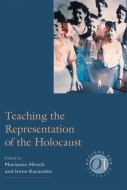
Teaching the Representation of the Holocaust
“Can the story be told?” Jorge Semprun asked after his liberation from Buchenwald. The question is addressed from many angles in this volume of essays on teaching about the Holocaust. In their introduction, Marianne Hirsch and Irene Kacandes argue that Semprun’s question is as vital now, and as difficult and complex, as it was for the survivors in 1945.
The thirty-eight contributors to Teaching the Representation of the Holocaust come from various disciplines (history, literary criticism, psychology, film studies) and address a wide range of issues pertinent to the teaching of a subject that many teachers and students feel is an essential part of a liberal arts education.
This volume offers approaches to such works as Jurek Becker’s Jacob the Liar, Roberto Benigni’s Life Is Beautiful, Anne Frank’s diary, Daniel Jonah Goldhagen’s Hitler’s Willing Executioners, Claude Lanzmann’s Shoah, Primo Levi’s Survival in Auschwitz, Cynthia Ozick’s The Shawl, Dan Pagis’s “Written in Pencil in the Sealed Railway Car,” Art Spiegelman’s Maus, Steven Spielberg’s Schindler’s List, Elie Wiesel’s Night, and Abraham Yehoshua’s Mr. Mani.
To the challenge “How do we transmit so hurtful an image of our own species without killing hope and breeding indifference?” posed by Geoffrey Hartman in this volume, the editors respond, “Only in the very human context of classroom interaction can we hope to avoid either false redemption or unending despair.”
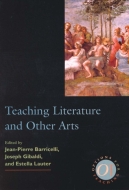
Teaching Literature and Other Arts
Focusing primarily on undergraduate teaching, this collection of eighteen pioneering essays describes courses interweaving literature with music and the visual arts. Each essay is supplemented by a syllabus of the course; an appendix offers six additional syllabi.
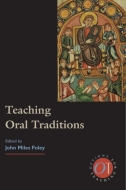
Teaching Oral Traditions
Research is beginning to unearth the astounding wealth of oral traditions that have served as a vital cultural activity and verbal art for peoples throughout the world, from antiquity to the present. In this thirteenth volume of the MLA series Options for Teaching, forty-two scholar-teachers bring these discoveries and rediscoveries from the scholarly forum to the classroom.
The essays in this exciting field touch on more than a hundred traditions and draw from the methodologies of literary studies, folklore, anthropology, and linguistics. They are filled with vivid specifics. Among the subjects discussed are the unwritten roots of the Bible; the genesis and art of the Homeric poems; Native American traditions, like the Zuni “Deer Boy” tale and the Quechua proverb “Corn-Planting Day”; the performance of the African American toast “Stagolee”; Old English charms for afflictions; Mexican American corridos; the Travelling People of Scotland; African trickster tales; women’s songs of mid-eleventh-century Andalusia; a Yiddish picaresque narrative; the fifth-century Indian Tale of an Anklet; South Slavic epics; the oral traditions behind Beowulf and behind the Canterbury Tales; the professional entertainers (jongleurs) of medieval France; and Icelandic sagas.
Teaching Oral Traditions demonstrates the importance of performance and challenges many current assumptions about the authority of the written word.
