Options for Teaching
There are 56 products in Options for Teaching
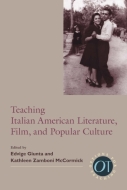
Teaching Italian American Literature, Film, and Popular Culture
Italian American studies has long been in conversation with American culture at large and is increasingly present in American universities and colleges. Yet once-celebrated works, such as Pietro di Donato’s Christ in Concrete, have slipped from the public consciousness, and many scholars fear that representations of Italian Americans in popular culture, as in The Godfather films and the television series The Sopranos, have obscured genuine historical inquiry and understanding. This volume aims to foster a deeper and more complex appreciation for the importance of Italian American texts in the study of American culture.
The editors open the volume by outlining the history of Italians in the United States and exploring the potential of literature and the arts to enable the recovery of a forgotten, even repressed, historical past. Over thirty scholars and teachers then present innovative ways of teaching Italian American texts and integrating them with other texts in courses ranging from American literature and history to multiethnic and women’s studies. Contributors discuss Italian American fiction, poetry, memoir, oral history, and theater and performance. A section on film and television provides an overview of popular as well as lesser-known works and interrogates the stereotyped portrayals of Italian Americans. Other contributors offer historical and interdisciplinary approaches to Italian American texts that revolve around themes of race and gender politics, work and social class, and historical intersections. The volume concludes with a review of anthologies that can be used in teaching Italian American studies.
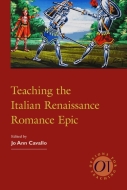
Teaching the Italian Renaissance Romance Epic
The Italian romance epic of the fifteenth and sixteenth centuries, with its multitude of characters, complex plots, and roots in medieval Carolingian epic and Arthurian chivalric romance, was a form popular with courtly and urban audiences. In the hands of writers such as Boiardo, Ariosto, and Tasso, works of remarkable sophistication that combined high seriousness and low comedy were created. Their works went on to influence Cervantes, Milton, Ronsard, Shakespeare, and Spenser.
In this volume instructors will find ideas for teaching the Italian Renaissance romance epic along with its adaptations in film, theater, visual art, and music. An extensive resources section locates primary texts online and lists critical studies, anthologies, and reference works.
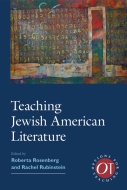
Teaching Jewish American Literature
A multilingual, transnational literary tradition, Jewish American writing has long explored questions of personal identity and national boundaries. These questions can engage students in literature, writing, or religion; at Jewish, Christian, or secular schools; and in or outside the United States.
This volume takes an expansive view of Jewish American literature, beginning with writing from the earliest colonies in the Americas and continuing to contemporary Soviet-born authors in the United States, including works that engage deeply with religious concepts and others that embrace assimilation. It invites readers to rethink the nature of American multiculturalism, suggests pairings of Jewish American texts with other ethnic American literatures, and examines the workings of whiteness and privilege.
Contributors offer varied perspectives on classic texts such as Yekl, Bread Givers, and “Goodbye, Columbus,” along with approaches to interdisciplinary topics including humor, graphic novels, and musical theater. The volume concludes with an extensive resources section.
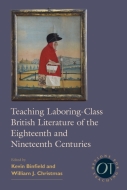
Teaching Laboring-Class British Literature of the Eighteenth and Nineteenth Centuries
Behind our contemporary experience of globalization, precarity, and consumerism lies a history of colonization, increasing literacy, transnational trade in goods and labor, and industrialization. Teaching British laboring-class literature of the eighteenth and nineteenth centuries means exploring ideas of class, status, and labor in relation to the historical developments that inform our lives as workers and members of society. This volume demonstrates pedagogical techniques and provides resources for students and teachers on autobiographies, broadside ballads, Chartism and other political movements, georgics, labor studies, satire, service learning, writing by laboring-class women, and writing by laboring people of African descent.
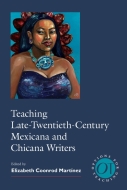
Teaching Late-Twentieth-Century Mexicana and Chicana Writers
Mexicana and Chicana authors from the late 1970s to the turn of the century helped overturn the patriarchal literary culture and mores of their time. This landmark volume acquaints readers with the provocative, at times defiant, yet subtle discourses of this important generation of writers and explains the influences and historical contexts that shaped their work.
Until now, little criticism has been published about these important works. Addressing this oversight, Teaching Late-Twentieth-Century Mexicana and Chicana Writers starts with essays on Mexicana and Chicana authors. It then features essays on specific teaching strategies suitable for literature surveys and courses in cultural studies, Latino studies, interdisciplinary and comparative studies, humanities, and general education that aim to explore the intersectionalities represented in these works. Experienced teachers offer guidance on using these works to introduce students to border studies, transnational studies, sexuality studies, disability studies, contemporary Mexican history and Latino history in the United States, the history of social movements, and concepts of race and gender.
Teaching the Latin American Boom
In the decade from the early 1960s to the early 1970s, Latin American authors found themselves writing for a new audience in both Latin America and Spain and in an ideologically charged climate as the Cold War found another focus in the Cuban Revolution. The writers who emerged in this energized cultural moment—among others, Julio Cortázar (Argentina), Guillermo Cabrera Infante (Cuba), José Donoso (Chile), Carlos Fuentes (Mexico), Gabriel García Márquez (Colombia), Manuel Puig (Argentina), and Mario Vargas Llosa (Peru)—experimented with narrative forms that sometimes bore a vexed relation to the changing political situations of Latin America.
This volume provides a wide range of options for teaching the complexities of the Boom, explores the influence of Boom works and authors, presents different frameworks for thinking about the Boom, proposes ways to approach it in the classroom, and provides resources for selecting materials for courses
Teaching Law and Literature
This volume provides a resource for teachers interested in learning about the field of law and literature and shows how to bring its insights to bear in their classrooms, both in the liberal arts and in law schools. Essays in the first section, “Theory and History of the Movement,” provide a retrospective of the field and look forward to new developments. The second section, “Model Courses,” offers readers an array of possibilities for structuring courses that integrate legal issues with the study of literature, from The Canterbury Tales to current prison literature. In “Texts,” the third section, guidance is provided for teaching not only written documents (novels, plays, trial reports) but also cultural objects: digital media, Native American ceremonies, documentary theater, hip-hop. The volume’s contributors investigate what constitutes law and literature and how each informs the other.
Teaching Life Writing Texts
The past thirty years have witnessed a rapid growth in the number and variety of courses and programs that study life writing from literary, philosophical, psychological, and cultural perspectives. The field has evolved from the traditional approach that biographies and autobiographies were always about prominent people—historically significant persons, the nobility, celebrities, writers—to the conception of life writing as a genre of interrogation and revelation. The texts now studied include memoirs, testimonios, diaries, oral histories, genealogies, and group biographies and extend to resources in the visual and plastic arts, in films and videos, and on the Internet. Today the tensions between canonical and emergent life writing texts, between the famous and the formerly unrepresented, are making the study of biography and autobiography a far more nuanced and multifarious activity.
This volume in the MLA series Options for Teaching builds on and complements earlier work on pedagogical issues in life writing studies. Over forty contributors from a broad range of educational institutions describe courses for every level of postsecondary instruction. Some writers draw heavily on literary and cultural theory; others share their assignments and weekly syllabi. Many essays grapple with texts that represent disability, illness, abuse, and depression; ethnic, sexual and racial discrimination; crises and catastrophes; witnessing and testimonials; human rights violations; and genocide. The classes described are taught in humanities, cultural studies, social science, and language departments and are located in, among other countries, the United States, Great Britain, Canada, Australia, Germany, Eritrea, and South Africa.
Teaching Literature and Language Online
Educators today teach in a range of formats, from traditional face-to-face courses to Web-assisted courses in physical classrooms to entirely online courses in which the teacher and students never meet in person. The pressure to integrate teaching with information technology is strong, and more and more educational institutions are offering blended courses and distance-education learning options.
The essays in this collection illuminate the realities of teaching language and literature courses online. Contributors present snapshots of their experiences with online pedagogies, realizing that, just as this year’s technology writes over last year’s, the approaches and teaching tools they have pioneered will also be obscured by future innovations. At the same time, the volume describes models that first-time teachers of online courses will find useful and provides extensive insights into online education for those who are experienced in teaching blended and open-source courses.
The volume begins with an overview of online education in the fields of literature and language and then offers case studies of particular technologies used in specific courses. Subjects extend from Old English and ancient world literature to Shakespeare and modern poetry, and languages include Aymara, Chinese, English as a second language, French, German, Italian, Japanese, and Spanish. Contributors describe using multimedia Web sites, cyberplay and gaming, bulletin boards, chat rooms, blogs, wikis, natural language processing, podcasting, course management systems, annotated electronic editions, text-analysis tools, and open-source applications. They show that online pedagogies often have surprising capabilities—such as transforming a Web-based environment into an intimate social community spanning institutions and oceans, saving endangered languages, and rescuing isolated communities and individuals who have no other educational lifeline.
Teaching Literature and Medicine
Courses in literature and medicine flourish in undergraduate, medical school, and continuing-education programs throughout the United States and Canada. This volume presents a variety of approaches to the subject. It is intended both for literary scholars and for physicians who teach literature and medicine or who are interested in interdisciplinary breadth.
The essays describe model courses; list readings widely taught in literature and medicine courses; discuss the value of texts in both medical education and the practice of medicine; and provide bibliographic resources, including works in the history of medicine from classical antiquity.
