Nonseries
There are 70 products in Nonseries
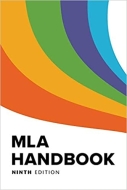
MLA Handbook
View our convenient chart comparing the eighth and ninth editions of the MLA Handbook.
Relied on by generations of writers, the MLA Handbook is published by the Modern Language Association and is the only official, authorized book on MLA style. The new, ninth edition builds on the MLA’s unique approach to documenting sources using a template of core elements—facts, common to most sources, like author, title, and publication date—that allows writers to cite any type of work, from books, e-books, and journal articles in databases to song lyrics, online images, social media posts, dissertations, and more. With this focus on source evaluation as the cornerstone of citation, MLA style promotes the skills of information and digital literacy so crucial today.
The many new and updated chapters make this edition the comprehensive, go-to resource for writers of research papers, and anyone citing sources, from business writers, technical writers, and freelance writers and editors to student writers and the teachers and librarians working with them. Intended for a variety of classroom contexts—middle school, high school, and college courses in composition, communication, literature, language arts, film, media studies, digital humanities, and related fields—the ninth edition of the MLA Handbook offers
- New chapters on grammar, punctuation, capitalization, spelling, numbers, italics, abbreviations, and principles of inclusive language
- Guidelines on setting up research papers in MLA format with updated advice on headings, lists, and title pages for group projects
- Revised, comprehensive, step-by-step instructions for creating a list of works cited in MLA format that are easier to learn and use than ever before
- A new appendix with hundreds of example works-cited-list entries by publication format, including Web sites, YouTube videos, interviews, and more
- Detailed examples of how to find publication information for a variety of sources
- Newly revised explanations of in-text citations, including comprehensive advice on how to cite multiple authors of a single work
- Detailed guidance on footnotes and endnotes
- Instructions on quoting, paraphrasing, summarizing, and avoiding plagiarism
- A sample essay in MLA format
- Annotated bibliography examples
- Numbered sections throughout for quick navigation
- Advanced tips for professional writers and scholars
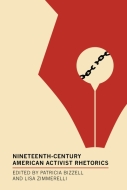
Nineteenth-Century American Activist Rhetorics
In the nineteenth century the United States was ablaze with activism and reform: people of all races, creeds, classes, and genders engaged with diverse intellectual, social, and civic issues. This cutting-edge, revelatory book focuses on rhetoric that is overtly political and oriented to social reform. It not only contributes to our historical understanding of the period by covering a wide array of contexts—from letters, preaching, and speeches to labor organizing, protests, journalism, and theater by white and Black women, Indigenous people, and Chinese immigrants—but also relates conflicts over imperialism, colonialism, women’s rights, temperance, and slavery to today’s struggles over racial justice, sexual freedom, access to multimodal knowledge, and the unjust effects of sociopolitical hierarchies. The editors’ introduction traces recent scholarship on activist rhetorics and the turn in rhetorical theory toward the work of marginalized voices calling for radical social change.
On Compiling an Annotated Bibliography (2nd edition)
James Harner’s popular pamphlet, first published in 1985, has been revised and updated in the light of advances in computer technology and the availability of humanities databases. Harner offers useful information on planning research, organizing an annotated bibliography, compiling entries, using a computer to prepare the manuscript, and editing. While the booklet focuses on the preparation of a comprehensive bibliography on a single literary author, the procedures and techniques are easily adapted to selective or subject bibliographies and to other periods and disciplines.
Perspectives on Research and Scholarship in Composition
Now in its fourth printing, this collection of thirteen essays reviews the major scholarship in a variety of fields that are shaping composition studies, including rhetoric, literary theory, cognitive studies, collaborative learning, and artificial-intelligence research.
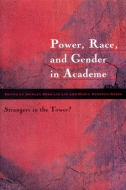
Power, Race, and Gender in Academe
The civil rights movement of the 1960s and the affirmative action programs enacted in the 1970s held great promise for people of color, women, and gays and lesbians seeking careers in higher education. Now, at the beginning of the twenty-first century, what is the status of these traditionally underrepresented groups in English and foreign language departments across the United States? The eleven essays collected in this volume describe individual African American, Chicano and Chicana, Native American, Asian American, gay and lesbian, and white female experiences in academe. Representing a wide variety of fields and career paths in the profession, the authors explore topics such as marginalization, alienation, and persistent discrimination; the obstacles women and minorities face in advancing their careers, as well as strategies for overcoming those obstacles; the backlash against affirmative action; and the implications of gender, sexuality, race, and power in the classroom. While many of the essays give strikingly personal accounts of their authors’ struggles, the collection as a whole reveals the complexity of academe’s response to the challenge of faculty diversity.
Power, Race, and Gender in Academe is an excellent resource and teaching guide for junior faculty members as they enter the profession. Administrators and senior colleagues will find in the volume thoughtful discussions of hiring and tenure practices, classroom and service evaluations, and other departmental procedures and their effects on a multicultural faculty.
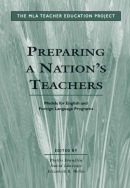
Preparing a Nation’s Teachers
Essays and reports on undergraduate preparation of teachers and on professional development for teachers already in the field, with practical advice for examining programs and initiating reforms.
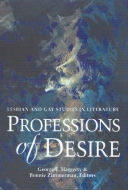
Professions of Desire
Professions of Desire includes examples of lesbian and gay literary analysis and thoughtful discussions about what it means to be lesbian, gay, or queer in the literature classroom. The four essays in the first section, “Teaching Positions,” examine teaching from a theoretical perspective, analyze the role of the professor in the classroom, and seek to redefine what instructors ask of their students as well as of themselves. In “Canons and Closets,” five essays discuss curricular and organizational shifts related to lesbian and gay studies. “Sameness and Differences” presents five essays that explore the influence of race, gender, and sexuality on gay and lesbian identity. Finally, the section “Transgressing Subjects” gathers four critical readings of various works.
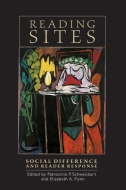
Reading Sites
Reading Sites explores how social differences condition and shape reader response. Bringing to the fore a key but long-unexplored issue, this volume extends reader-response theory and unites it with more recent discussions on the ethics of reading to consider how readers from different class, gender, racial, and ethnic positions respond to texts, authors, and other real or imagined readers. Integrating scholarship from literary studies and composition and rhetoric, Reading Sites examines a host of genres, from nineteenth-century working-class autobiographies and twentieth-century women’s confessional magazines to detective fiction and book-club selections, to question how various groups of readers and authors identify with competing social hierarchies.
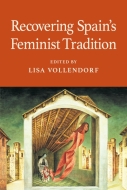
Recovering Spain’s Feminist Tradition
Feminist scholarship has entered an age of internationalism during the past two decades, as is evident in the wider range of cultural and national traditions now included in historical and literary studies. Yet, as Lisa Vollendorf points out in her introduction to this volume, “Spain is one of the countries that remain on the margins of the debate. Despite a growing number of feminists in all regions of Spain, Spanish women do not appear either as authors or subjects in anthologies of feminist thinking and criticism published in English.”
Hoping to redress this neglect, the editor of Recovering Spain’s Feminist Tradition has gathered nineteen completely new essays on women writers who either call themselves feminist or deal with feminist issues in their work. Hailing from the medieval period to the present and representing a broad range of genres and topics, these women—court writers, nuns, housewives, journalists, politicians—trace the historical roots of Spain’s feminist consciousness and emphasize its rich intellectual traditions. The contributions provide a balance between writers well known in Spain and those who have only recently received critical attention—from Santa Teresa de Jesús and María de Zayas to Emilia Pardo Bazán and Montserrat Roig. The last three essays in the volume focus on Spain’s “double minorities”: Catalan women writers.
This fascinating and insightful collection merits a place in the libraries of students and scholars of world literature, Spanish history, and women’s studies.
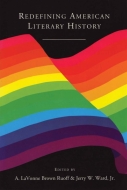
Redefining American Literary History
Redefining American Literary History presents seventeen essays and six bibliographies linked, in the words of the introduction, by “a commitment to deal with history and attributes of literature in ways that have been slighted in the making of previous literary histories of the United States.” The volume suggests methods for redefining the American literary canon and emphasizes African American, American Indian, Asian American, Chicano, Hispanic, and Puerto Rican literatures.
