Nonseries
There are 70 products in Nonseries
Redrawing the Boundaries
In this collection of essays, twenty-four leading scholars examine the major developments that have expanded the horizons of English and American literary studies during recent decades.
Redrawing the Boundaries reviews the significant scholarship for major historical periods and surveys new directions in literary criticism and in composition studies. Each essay is accompanied by an annotated list of suggestions for further reading; the book concludes with an extensive list of works cited and a name index.
Scholarly Editing
This collection of twenty-six essays, written by acknowledged experts in literary studies, surveys the history of scholarly editing, describes the major research in a variety of disciplines, summarizes the resources available to scholars, and analyzes the issues currently facing textual editors.
The book begins with an overview of scholarly editing, followed by four essays on the long tradition of editing the Bible and the Greek and Latin classics. The next cluster of essays proceeds through the major periods of British and American literature, from medieval to modern, further subdividing the Renaissance and the nineteenth century by genre and including a chapter devoted to Shakespeare. Additional essays cover other European literatures: French (Old French and early modern), Italian, medieval Spanish, German, and Russian. The concluding essays discuss representative non-European literatures and the “nonliterary” editing of folk literature in various languages. Each chapter includes a history of scholarly editing in the field, a citation of exemplary editions, and an introduction to a recommended list of further readings.
Service Learning and Literary Studies in English
Service learning can help students develop a sense of civic responsibility, often while addressing pressing community needs. One goal of literary studies is to understand the ethical dimensions of the world, and thus service learning, by broadening the environments students consider, is well suited to the literature classroom. Whether through a public literacy project that demonstrates the relevance of literary study or community-based research that brings literary theory to life, student collaboration with community partners brings social awareness to the study of literary texts and helps students and teachers engage literature in new ways.
In their introduction, the volume editors trace the history of service learning in the United States, including the debate about literature’s role, and outline the best practices of the pedagogy. The essays that follow cover American, English, and world literature; creative nonfiction and memoir; literature-based writing; and cross-disciplinary studies. Contributors describe a wide variety of service-learning projects, including a course on the Harlem Renaissance in which students lead a community writing workshop, an English capstone seminar in which seniors design programs for public libraries, and a creative nonfiction course in which first-year students work with elderly community members to craft life narratives. The volume closes with a list of resources for practitioners and researchers in the field.
Idaho State University Teaching Literature Book Award Winner
Spanish Golden Age Drama
This bibliography compiles over 1,600 doctoral dissertations on the theater of the Spanish Golden Age, including material not found in Dissertation Abstracts International. Part 1 lists dissertations accepted over the last one hundred years in the United States; part 2 lists those written in other countries. Information provided in entries includes the name of the dissertation writer, the title of the dissertation, the number of pages, the institution that granted the degree, the name of the dissertation’s director, the date of submission, the source of the reference, an abstract or clarifying notation, and resultant or related publications.
With its classifications, annotations, and indexes, the volume provides a huge database of bibliographic citations and helps scholars and graduate students choose, or avoid, topics for research.
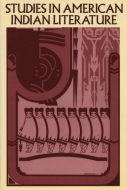
Studies in American Indian Literature
This classic volume in Native American studies features essays on traditional and modern American Indian literature and provides course outlines that instructors can implement singly or sequentially. The book includes material on introductory and survey courses, regional studies in the oral tradition, transitional literature, feminist and interdisciplinary approaches, and Indian themes and perspectives in American literature.
Studies on Canadian Literature
This book celebrates “the arrival of a national literature on the international stage.” As the editor, Arnold E. Davidson, writes, “Books by Canadian authors are being read outside Canada in greater numbers than ever before. . . . Canadian studies (in its various aspects) is now taught in many countries, and many of those countries have their own academic associations to further Canadian studies.”
Intended primarily for nonspecialists, the twenty essays in the volume suggest the breadth of Canadian literature and illustrate the range and variety of contemporary Canadian criticism. The first section contains eight essays on Canadian writing in English; the second, eight essays on Canadian writing in French. Each section begins with an overview essay on the historical development of the literature. In the third section, four comparative essays “cross and conjoin the linguistic divide.” The volume concludes with annotated bibliographic guides to Québec literature and English-Canadian literature, a list of contributors, and an index.
Teaching and Studying Transnational Composition
Transnational composition is a site for engaging with difference across populations, economies, languages, and borders and for asking how cultures, languages, and national imaginaries interanimate one another.
Organized in three parts, the book addresses the transnational in composition in scholarship, teaching, and administration. It brings together contributions from institutional, geopolitical, and cultural contexts ranging across North America, Europe, Latin America, Africa, the Middle East, Asia, and the Caribbean and covers writing in English, Chinese, multiple European languages, Latin American Spanish, African and West Indian Creoles, and Guianan French. Exploring the relationship among transnational, international, global, and translingual approaches to composition—while complicating the term composition itself—essays draw on theories of border work, mobility, liminality, cross-border interaction, center-periphery contours, superdiversity, and transnational rhetoric and address, among other topics, models of cognitive processing, principles of universal design, and frames of critical literacy awareness.
Teaching Literature and Writing in Prisons
As the work of Malcolm X, Angela Y. Davis, and others has made clear, education in prison has enabled people to rethink systems of oppression. Courses in reading and writing help incarcerated students feel a sense of community, examine the past and present, and imagine a better future. Yet incarcerated students often lack the resources, materials, information, and opportunity to pursue their coursework, and training is not always available for those who teach incarcerated students. This volume will aid both new and experienced instructors by providing strategies for developing courses, for creating supportive learning environments, and for presenting and publishing incarcerated students' scholarly and creative work. It also suggests approaches to self-care designed to help instructors sustain their work. Essays incorporate the perspectives of both incarcerated and nonincarcerated teachers and students, centering critical prison studies scholarship and abolitionist perspectives.
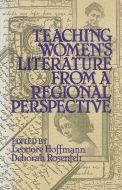
Teaching Women’s Literature from a Regional Perspective
This collection of essays and materials aims to help teachers design courses in which students use out-of-print books, autobiographies, letters, diaries, memoirs, and oral testimonies by the women of their region.
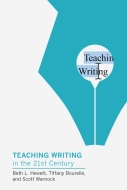
Teaching Writing in the Twenty-First Century
Teaching Writing in the Twenty-First Century is a comprehensive introduction to writing instruction in an increasingly digital world. It provides both a theoretical background and detailed practical guidance to writing instructors faced with novel and ever-changing digital learning technologies, new approaches to access needs and usability design, increasing student diversity, and the multiliteracies of reading, alphabetic writing, and multimodal composition. A companion volume, Administering Writing Programs in the Twenty-First Century, considers the role of administrators in addressing these issues.
Covering all aspects of teaching online, various composition genres, and the technologies available to teachers, Teaching Writing in the Twenty-First Century addresses composing processes and approaches; designing and scaffolding assignments; providing response, feedback, and evaluation; communicating effectively; and supporting students. These strategic and practical ideas are prefaced by a history of the relation between composition and rhetoric and a guide to diversity, inclusion, and access. The volume ends with a chapter on envisioning the future of composition.
