Nonseries
There are 70 products in Nonseries
Manual MLA
Generación tras generación, los escritores confían en el MLA Handbook. Publicado por la Modern Language Association, este manual es la guía ideal para redactar textos académicos y documentar fuentes y el mejor recurso para toda persona que escribe trabajos de investigación con múltiples referencias a otros estudios. Esta nueva adaptación al español es una herramienta completa y necesaria para profesionales que necesitan dominar la redacción de textos técnicos, académicos o de negocios. Instrumento de vital ayuda para estudiantes, docentes, universitarios y bibliotecarios, el manual ofrece pautas uniformes y comprensibles para elaborar una prosa clara y atractiva, evaluar fuentes para citarlas y acreditarlas con precisión, y dar formato a cualquier trabajo de investigación. Con información relevante sobre
- gramática, puntuación, mayúsculas, ortografía, números y lenguaje inclusivo
- cómo crear citas dentro del texto, hacer un listado de obras citadas, crear notas al pie y notas finales
- cómo citar, parafrasear y resumir
- evitar el plagio
Esta edición incluye indicaciones específicas para dominar el español escrito, como el uso de los signos de puntuación—comas de enumeración, guiones o rayas—el uso de mayúsculas en títulos y subtítulos, la estilización de los apellidos o la colocación de otros signos de puntuación en relación con las comillas. Para ello, el Manual MLA ofrece cientos de ejemplos en español: citas de libros, artículos de revistas, sitios webs, películas y programas de televisión, entre otros.
Generations of writers have relied on the MLA Handbook, published by the Modern Language Association, for guidance on writing and on documenting sources. This new Spanish adaptation of the handbook is a comprehensive resource for Spanish-language writers of research papers and anyone citing sources, from business writers, technical writers, and editors to student writers and the teachers and librarians working with them. It establishes uniform, easy-to-follow guidelines that help writers craft clear and engaging prose, evaluate sources and accurately cite and credit them, and format research papers. It includes information on
- grammar, punctuation, capitalization, spelling, numbers, and inclusive language
- creating in-text citations, the list of works cited, and footnotes and endnotes
- quoting, paraphrasing, and summarizing
- avoiding plagiarism
Guidance unique to this edition includes matters of punctuation in Spanish, from the serial comma to hyphens and dashes; capitalizing titles and subtitles in Spanish and styling Spanish surnames; the placement of other punctuation marks in relation to quotation marks; and more. In the Manual MLA, readers will find hundreds of new Spanish-language examples—including citations for books, journal articles, websites, films, and television shows.
Graduate Education for a Thriving Humanities Ecosystem
While the humanities remain as necessary as ever, the shrinking academic job market has led scholars to rethink the nature and purpose of graduate school in these fields. Highlighting examples of innovative approaches, this volume aims to provide resources and inspiration for a sustainable, thriving, and even joyful future for the humanities.
The essays in this collection offer a framework for doctoral education and postdoctoral careers rooted in concepts of abundance, collaboration, community engagement, and personal well-being. They emphasize the role of the humanities in helping people analyze texts, imagine others' perspectives, make ethical decisions, and sit with ambiguity. They propose graduate programs that respond to student and community needs and lead to a variety of career paths. Finally, they envision opportunities for meaningful, fulfilling work in the service of a larger purpose.
Teaching Literature and Writing in Prisons
As the work of Malcolm X, Angela Y. Davis, and others has made clear, education in prison has enabled people to rethink systems of oppression. Courses in reading and writing help incarcerated students feel a sense of community, examine the past and present, and imagine a better future. Yet incarcerated students often lack the resources, materials, information, and opportunity to pursue their coursework, and training is not always available for those who teach incarcerated students. This volume will aid both new and experienced instructors by providing strategies for developing courses, for creating supportive learning environments, and for presenting and publishing incarcerated students' scholarly and creative work. It also suggests approaches to self-care designed to help instructors sustain their work. Essays incorporate the perspectives of both incarcerated and nonincarcerated teachers and students, centering critical prison studies scholarship and abolitionist perspectives.
Lost Texts in Rhetoric and Composition
A project of recovery and reanimation, Lost Texts in Rhetoric and Composition foregrounds a broad range of publications that deserve renewed attention. Contributors to this volume reclaim these lost texts to reenvision the rhetorical tradition itself. Authors discussed include not only twentieth-century American compositionists but also a linguist, a poet, a philosopher, a painter, a Renaissance rhetorician, and a nineteenth-century pioneer of comics; the collection also features some less-studied works by authors who remain well known. These texts will give rise to new conversations about current ideas in rhetoric and composition.
Beyond Fitting In
Beyond Fitting In interrogates how the cultural capital and lived experiences of first-generation college students inform literacy studies and the writing-centered classroom. Essays, written by scholar-teachers in the field of rhetoric and composition, discuss best practices for teaching first-generation students in writing classrooms, centers, programs, and other environments. The collection considers how first-gen students of different demographics interact with and affect literacy instruction in a variety of public and private, rural and urban schools offering two- or four-year programs, including Hispanic-serving institutions, historically Black colleges and universities, and public research universities. By exploring the experiences of students, teachers, writing program administrators, and writing center directors, the volume gives readers an inside view of the practices and structures that shape the literacy of first-generation students.
Teaching and Studying Transnational Composition
Transnational composition is a site for engaging with difference across populations, economies, languages, and borders and for asking how cultures, languages, and national imaginaries interanimate one another.
Organized in three parts, the book addresses the transnational in composition in scholarship, teaching, and administration. It brings together contributions from institutional, geopolitical, and cultural contexts ranging across North America, Europe, Latin America, Africa, the Middle East, Asia, and the Caribbean and covers writing in English, Chinese, multiple European languages, Latin American Spanish, African and West Indian Creoles, and Guianan French. Exploring the relationship among transnational, international, global, and translingual approaches to composition—while complicating the term composition itself—essays draw on theories of border work, mobility, liminality, cross-border interaction, center-periphery contours, superdiversity, and transnational rhetoric and address, among other topics, models of cognitive processing, principles of universal design, and frames of critical literacy awareness.
Teaching Writing in the Twenty-First Century
Teaching Writing in the Twenty-First Century is a comprehensive introduction to writing instruction in an increasingly digital world. It provides both a theoretical background and detailed practical guidance to writing instructors faced with novel and ever-changing digital learning technologies, new approaches to access needs and usability design, increasing student diversity, and the multiliteracies of reading, alphabetic writing, and multimodal composition. A companion volume, Administering Writing Programs in the Twenty-First Century, considers the role of administrators in addressing these issues.
Covering all aspects of teaching online, various composition genres, and the technologies available to teachers, Teaching Writing in the Twenty-First Century addresses composing processes and approaches; designing and scaffolding assignments; providing response, feedback, and evaluation; communicating effectively; and supporting students. These strategic and practical ideas are prefaced by a history of the relation between composition and rhetoric and a guide to diversity, inclusion, and access. The volume ends with a chapter on envisioning the future of composition.
Administering Writing Programs in the Twenty-First Century
This book is a comprehensive guide to administering writing programs at a moment when communication, and thus the teaching of writing, is always changing. A companion to Teaching Writing in the Twenty-First Century, which considers how writing instructors can successfully adapt to new challenges, this volume addresses the concerns of both novice and experienced writing program administrators. It includes guidance on building and assessing writing programs; on hiring, training, evaluating, and mentoring instructors; on eliminating cultural bias; on encouraging the well-being of administrators and instructors; on assignments and instructional tools; and on access, diversity, and inclusion. Aiming to help administrators develop thoughtful, effective approaches to using technology in writing programs, the book also provides information designed to support instructors in their teaching of rhetorical literacy strategies regardless of the environment or medium in which students compose and communicate.
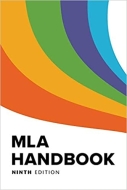
MLA Handbook
View our convenient chart comparing the eighth and ninth editions of the MLA Handbook.
Relied on by generations of writers, the MLA Handbook is published by the Modern Language Association and is the only official, authorized book on MLA style. The new, ninth edition builds on the MLA’s unique approach to documenting sources using a template of core elements—facts, common to most sources, like author, title, and publication date—that allows writers to cite any type of work, from books, e-books, and journal articles in databases to song lyrics, online images, social media posts, dissertations, and more. With this focus on source evaluation as the cornerstone of citation, MLA style promotes the skills of information and digital literacy so crucial today.
The many new and updated chapters make this edition the comprehensive, go-to resource for writers of research papers, and anyone citing sources, from business writers, technical writers, and freelance writers and editors to student writers and the teachers and librarians working with them. Intended for a variety of classroom contexts—middle school, high school, and college courses in composition, communication, literature, language arts, film, media studies, digital humanities, and related fields—the ninth edition of the MLA Handbook offers
- New chapters on grammar, punctuation, capitalization, spelling, numbers, italics, abbreviations, and principles of inclusive language
- Guidelines on setting up research papers in MLA format with updated advice on headings, lists, and title pages for group projects
- Revised, comprehensive, step-by-step instructions for creating a list of works cited in MLA format that are easier to learn and use than ever before
- A new appendix with hundreds of example works-cited-list entries by publication format, including Web sites, YouTube videos, interviews, and more
- Detailed examples of how to find publication information for a variety of sources
- Newly revised explanations of in-text citations, including comprehensive advice on how to cite multiple authors of a single work
- Detailed guidance on footnotes and endnotes
- Instructions on quoting, paraphrasing, summarizing, and avoiding plagiarism
- A sample essay in MLA format
- Annotated bibliography examples
- Numbered sections throughout for quick navigation
- Advanced tips for professional writers and scholars
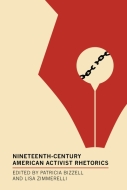
Nineteenth-Century American Activist Rhetorics
In the nineteenth century the United States was ablaze with activism and reform: people of all races, creeds, classes, and genders engaged with diverse intellectual, social, and civic issues. This cutting-edge, revelatory book focuses on rhetoric that is overtly political and oriented to social reform. It not only contributes to our historical understanding of the period by covering a wide array of contexts—from letters, preaching, and speeches to labor organizing, protests, journalism, and theater by white and Black women, Indigenous people, and Chinese immigrants—but also relates conflicts over imperialism, colonialism, women’s rights, temperance, and slavery to today’s struggles over racial justice, sexual freedom, access to multimodal knowledge, and the unjust effects of sociopolitical hierarchies. The editors’ introduction traces recent scholarship on activist rhetorics and the turn in rhetorical theory toward the work of marginalized voices calling for radical social change.
