Nonseries
There are 70 products in Nonseries
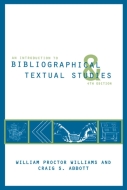
An Introduction to Bibliographical and Textual Studies, 4th ed.
To a reader of Joyce’s Ulysses, it makes a difference whether one of Stephen Dedalus’s first thoughts is “No mother” (as in the printed version) or “No, mother!” (as in the manuscript). The scholarship surrounding such textual differences—and why this discipline should concern readers and literary scholars alike—is the focus of William Proctor Williams and Craig S. Abbott’s acclaimed handbook.
This updated, fourth edition outlines the study of texts’ composition, revision, physical embodiments, process of transmission, and manner of reception; describes how new technologies such as digital imaging and electronic tagging have changed the way we produce, read, preserve, and research texts; discusses why these matters are central to a historical understanding of literature; and shows how the insights, methods, and products of bibliographical and textual studies can be applied to other branches of scholarship.
The volume begins with an introduction to the various kinds of bibliographical investigation. The chapters address
- analytic bibliography: the printing history of books, determined by an examination of their physical features
- descriptive bibliography: how a book is described; all the alterations made in it during the process of its production
- a text and its embodiments: a comparison of two imaginary texts, one produced during the handpress period, the other during the machine-press period
- textual criticism: how critics identify the texts of a work and their various states, determine the relations among the texts, discover the sources of textual variation, and establish a definitive scholarly text
- editorial procedure: a discussion of how critical editions are prepared
A reference bibliography and a glossary of terms are provided.

Beyond Fitting In
Beyond Fitting In interrogates how the cultural capital and lived experiences of first-generation college students inform literacy studies and the writing-centered classroom. Essays, written by scholar-teachers in the field of rhetoric and composition, discuss best practices for teaching first-generation students in writing classrooms, centers, programs, and other environments. The collection considers how first-gen students of different demographics interact with and affect literacy instruction in a variety of public and private, rural and urban schools offering two- or four-year programs, including Hispanic-serving institutions, historically Black colleges and universities, and public research universities. By exploring the experiences of students, teachers, writing program administrators, and writing center directors, the volume gives readers an inside view of the practices and structures that shape the literacy of first-generation students.
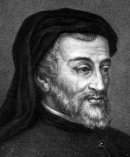
Chaucer’s Fame in England
This new bibliography of over 1,300 Chaucer references builds on a rich tradition of vigorous scholarship, starting with Caroline Spurgeon’s 1925 landmark compilation, Five Hundred Years of Chaucer Criticism and Allusion, 1357–1900. Since the publication of Spurgeon’s volume, two additional bibliographic tools became available to Chaucer scholars: the Short-Title Catalogue, which lists books printed in English from 1475 to 1640, and the University Microfilms project, which makes microfilm versions of those books available to researchers. Chaucer’s Fame lists Chaucer references, allusions, and echoes for books listed in the STC, incorporates and emends all 300 of Spurgeon’s references to books in English, and presents additional Chaucer references unearthed by scholars since 1925, some of which are here published for the first time.
Contemporary Critical Theory
Contemporary Critical Theory is an up-to-date overview of significant theories and theorists in literary studies. The volume contains introductory essays on a range of critical theories—from Russian formalism and New Criticism to postcolonial studies and the new historicism—and lists nearly two thousand journals and books (including translations) published in English. Many of the entries provide brief annotations. Marshall summarizes the work of fifty prominent theorists, such as Mikhail Bakhtin, Roland Barthes, Walter Benjamin, Julia Kristeva, and Jacques Lacan. The bibliography and author summaries are arranged topically, but listings are cross-referenced to help users locate books that discuss a variety of approaches. An index of authors and translators completes the volume.
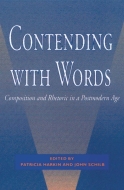
Contending with Words
Twelve previously unpublished essays relate the teaching of writing to various aspects of postmodern thought, including feminism, neo-Marxist theories, the historiography of Michel Foucault, and cultural criticism. The first ten essays examine modes of discourse ranging from Socratic dialogue to the “false magic” of the National Enquirer, review the present disciplinary impulses of composition studies, and propose new directions for the teaching of writing. The two closing articles synthesize the arguments of the essays and respond critically to the collection as a whole.
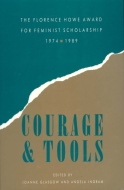
Courage and Tools
Since 1974, the Florence Howe Award has honored distinguished feminist literary criticism written by scholars in the fields of language and literature study. Seventeen winning essays—many never before published—are collected in one volume, Courage and Tools. Written by leading scholars and theorists, these groundbreaking essays discuss topics such as resistance to the patriarchal order and the development of a feminist literary theory and explore the works of writers such as Margaret Atwood, Elizabeth Barrett Browning, George Eliot, Henry James, Herman Melville, Toni Morrison, Sylvia Plath, and Alexander Pope.
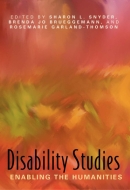
Disability Studies: Enabling the Humanities
Images of disability pervade language and literature, yet disability is, as the volume's introduction notes, "the ubiquitous unspoken topic in contemporary culture." The twenty-five essays in Disability Studies provide perspectives on disabled people and on disability in the humanities, art, the media, medicine, psychology, the academy, and society.
Edited and introduced by Sharon L. Snyder, Brenda Jo Brueggemann, and Rosemarie Garland-Thomson and containing an afterword by Michael Bérubé (author of Life As We Know It), the volume is rich in its cast of characters (including John Bulwer, Teresa de Cartagena, Audre Lorde, Oliver Sacks, Samuel Johnson, Mark Twain, Walt Whitman); in its powerful, authentic accounts of disabled conditions (deafness, blindness, MS, cancer, the absence of limbs); in its different settings (ancient Greece, medieval Spain, Nazi Germany, the modern United States); and in its mix of the intellectual and the emotional, of subtle theory and plainspoken autobiography.
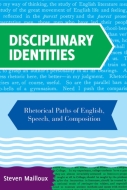
Disciplinary Identities
What are the historical relations among academic disciplines focused on oral and written rhetoric? In Disciplinary Identities, Steven Mailloux examines the formation of English literary studies, speech communication, and composition, explaining how these fields came to be shaped and separated as they are today. In so doing, Mailloux illustrates the interpretive power of a technique he calls rhetorical hermeneutics: his critical history of disciplinary formations both describes rhetoric as a topic of study and uses it as a tool for understanding how scholarship is organized professionally and politically.
Mailloux thus traces the paths taken by the topic of rhetoric as it migrates among disciplines. At the same time, he examines the tropes, arguments, narratives, and other pieces of rhetoric used by practitioners to shape disciplinary identities. Mailloux also uses rhetorical hermeneutics to explore the intersections of academic disciplines and nonacademic public spheres, moving from the role of nineteenth-century African American intellectuals in and outside the academy to that of the academic intellectual within post-September 11 cultural politics. Through multidisciplinary inquiry, Disciplinary Identities seeks to engage all teachers and scholars of the language arts in a renewed conversation about our shared history and our mutual devotion to pedagogy, criticism, history, and theory.
Steven Mailloux is professor of English, Chancellor’s Professor of Rhetoric, and director of the Critical Theory Emphasis at the University of California, Irvine. His works include Rhetorical Power (Cornell UP, 1989) and Reception Histories: Rhetoric, Pragmatism, and American Cultural Politics (Cornell UP, 1998).
Discourse
Recommended for all teachers of composition and rhetoric, this volume is the most comprehensive and detailed analysis of recent discourse theory available. In the first part of Discourse, “Analysis of Theories,” Crusius summarizes and analyzes the theories of Kinneavy, Moffet, Britton, and D’Angelo. “A Dialogical Synthesis—and Beyond,” the book’s second part, reveals connections between these seemingly disparate theories and synthesizes the most useful aspects into a view of rhetoric that moves discourse theory in the direction of hermeneutics rather than deconstruction.
