MLA Texts and Translations
There are 80 products in MLA Texts and Translations

Giambatista Viko; or, The Rape of African Discourse
Georges Ngal's pathbreaking satire Giambatista Viko explores the vexed relations between metropolitan centers and peripheral former colonies through its titular antihero, an African professor at an African studies institute divided between European-focused cosmopolitans and Africanists. Struggling to write the great African novel and subject to abuse, Viko realizes he can no longer separate the African and the European parts of his multilayered, African francophone culture. Viko's fate is a warning about the perils of artistic creation in a world where power is not shared. Part of the wave of African novels of the 1960s and 1970s that grappled with the disenchantments of decolonization, Giambatista Viko can be read at once as a Congolese novel, a francophone novel, and a work of world literature.

Giambatista Viko; ou, Le viol du discours africain
Georges Ngal's pathbreaking satire Giambatista Viko explores the vexed relations between metropolitan centers and peripheral former colonies through its titular antihero, an African professor at an African studies institute divided between European-focused cosmopolitans and Africanists. Struggling to write the great African novel and subject to abuse, Viko realizes he can no longer separate the African and the European parts of his multilayered, African francophone culture. Viko's fate is a warning about the perils of artistic creation in a world where power is not shared. Part of the wave of African novels of the 1960s and 1970s that grappled with the disenchantments of decolonization, Giambatista Viko can be read at once as a Congolese novel, a francophone novel, and a work of world literature.
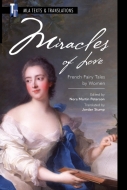
Miracles of Love
Before children's stories came to exemplify the French fairy tale, early modern audiences read the works of women writers known as conteuses. From the late seventeenth century through the Revolution, the conteuses published rich, complex tales that were popular in literary salons and elite courtly settings.
These unpredictable works feature candid representations of female desire, strong support for the education of women, and surprising twists on the fairy tale formulas familiar to readers of Charles Perrault. Not only witty and entertaining, the tales also comment on the unfair treatment of women that the authors saw in society, history, and myth.
Brief biographies introduce to new audiences writers who challenged social conventions, won popular and critical acclaim, and defined the fairy tale genre in their own time.
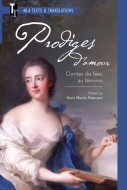
Prodiges d’amour
Before children's stories came to exemplify the French fairy tale, early modern audiences read the works of women writers known as conteuses. From the late seventeenth century through the Revolution, the conteuses published rich, complex tales that were popular in literary salons and elite courtly settings.
These unpredictable works feature candid representations of female desire, strong support for the education of women, and surprising twists on the fairy tale formulas familiar to readers of Charles Perrault. Not only witty and entertaining, the tales also comment on the unfair treatment of women that the authors saw in society, history, and myth.
Brief biographies introduce to new audiences writers who challenged social conventions, won popular and critical acclaim, and defined the fairy tale genre in their own time.
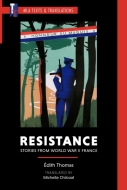
Resistance: Stories from World War II France
Based on real events of the French Resistance during World War II, Édith Thomas’s stories explore how ordinary people respond to the extraordinary conditions of political occupation. The stories, first published under the title Contes d’Auxois (Auxois Stories) by an underground press in 1943, were written to oppose Vichy-Nazi propaganda and to offer encouragement to civilians who felt resigned to defeat.
Whether lining up to wait for food, tuning in to a forbidden radio broadcast, adapting to living side by side with German soldiers, or preparing for an act of sabotage, the characters in these stories must make choices in highly compromised circumstances on a daily basis. As the characters confront their own suffering and that of others, their actions inspire readers to consider the nature of heroism, the idea that people can share a common humanity with their enemies, and the possibility for individuals to find solidarity in an overwhelming, isolating world.
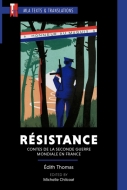
Résistance: Contes de la Seconde Guerre mondiale en France
Based on real events of the French Resistance during World War II, Édith Thomas’s stories explore how ordinary people respond to the extraordinary conditions of political occupation. The stories, first published under the title Contes d’Auxois by an underground press in 1943, were written to oppose Vichy-Nazi propaganda and to offer encouragement to civilians who felt resigned to defeat.
Whether lining up to wait for food, tuning in to a forbidden radio broadcast, adapting to living side by side with German soldiers, or preparing for an act of sabotage, the characters in these stories must make choices in highly compromised circumstances on a daily basis. As the characters confront their own suffering and that of others, their actions inspire readers to consider the nature of heroism, the idea that people can share a common humanity with their enemies, and the possibility for individuals to find solidarity in an overwhelming, isolating world.
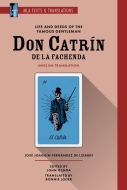
Life and Deeds of the Famous Gentleman Don Catrín de la Fachenda
Don Catrín de la Fachenda, here translated into English for the first time, is a picaresque novel by the Mexican writer José Joaquín Fernández de Lizardi (1776–1827), best known as the author of El Periquillo Sarniento (The Itching Parrot), often called the first Latin American novel. Don Catrín is three things at once: a rakish pícaro in the tradition of the picaresque; a catrín, a dandy or fop; and a criollo, a person born in the New World and belonging to the same dominant class as their Spanish-born parents but relegated to a secondary status. The novel interrogates then current ideas about the supposed innateness of race and caste and plays with other aspects of the self considered more extrinsic, such as appearance and social disguise. While not directly mentioning the Mexican wars of independence, Don Catrín offers a vivid representation of the political and social frictions that burst into violence around 1810 and gave birth to the independent countries of Latin America.
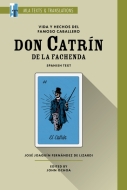
Vida y hechos del famoso caballero don Catrín de la Fachenda
Don Catrín de la Fachenda is a picaresque novel by the Mexican writer José Joaquín Fernández de Lizardi (1776–1827), best known as the author of El Periquillo Sarniento (The Itching Parrot), often called the first Latin American novel. Don Catrín is three things at once: a rakish pícaro in the tradition of the picaresque; a catrín, a dandy or fop; and a criollo, a person born in the New World and belonging to the same dominant class as their Spanish-born parents but relegated to a secondary status. The novel interrogates then current ideas about the supposed innateness of race and caste and plays with other aspects of the self considered more extrinsic, such as appearance and social disguise. While not directly mentioning the Mexican wars of independence, Don Catrín offers a vivid representation of the political and social frictions that burst into violence around 1810 and gave birth to the independent countries of Latin America.

The Woman with the Wolf
Although Renée Vivien led a life of wealth and privilege in belle epoque Paris, she often felt like an outsider because she was attracted to other women. Financially secure, she wrote books to suit her own taste rather than that of the literary market. The Woman with the Wolf (La dame à la louve), from 1904, shows her at the height of her powers.
These fierce, surprising stories challenge moral hypocrisy and normative views about gender, beginning with the title work, which offers a coded representation of same-sex love in the seemingly inexplicable commitment between a woman and her canine companion. The following stories feature a reimagined fairy tale in which Prince Charming turns out to be a young woman, a western adventure whose narrator goes mad with thirst, and other unconventional narratives that range across time and space.
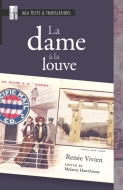
La dame à la louve
Although Renée Vivien led a life of wealth and privilege in belle epoque Paris, she often felt like an outsider because she was attracted to other women. Financially secure, she wrote books to suit her own taste rather than that of the literary market. La dame à la louve, from 1904, shows her at the height of her powers.
These fierce, surprising stories challenge moral hypocrisy and normative views about gender, beginning with the title work, which offers a coded representation of same-sex love in the seemingly inexplicable commitment between a woman and her canine companion. The following stories feature a reimagined fairy tale in which Prince Charming turns out to be a young woman, a western adventure whose narrator goes mad with thirst, and other unconventional narratives that range across time and space.
