MLA Texts and Translations
There are 80 products in MLA Texts and Translations
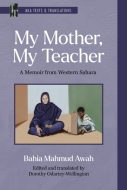
My Mother, My Teacher
Separated from his family in the aftermath of the failed decolonization process in Western Sahara, Bahia Mahmud Awah was sustained by recollections of his mother. In this memoir, he describes her sacrifices, her optimism, and her deep love. His family's experiences exemplify the larger story of loss and displacement in the region even as his story shows how shared memories can nourish community and culture across generations, even in exile. Incorporating poetry in Hassaniya, the traditional Saharawi language, the work highlights the role of language in shaping identity and resisting colonialism.
First published in 2011 as La maestra que me enseñó en una tabla de madera (The Woman Who Taught Me on a Wooden Slate), this edition includes the first complete English translation and a new epilogue by the author featuring further remembrances of his mother and examples of her poetry.
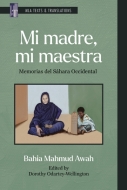
Mi madre, mi maestra
Separated from his family in the aftermath of the failed decolonization process in Western Sahara, Bahia Mahmud Awah was sustained by recollections of his mother. In this memoir, he describes her sacrifices, her optimism, and her deep love. His family's experiences exemplify the larger story of loss and displacement in the region even as his story shows how shared memories can nourish community and culture across generations, even in exile. Incorporating poetry in Hassaniya, the traditional Saharawi language, the work highlights the role of language in shaping identity and resisting colonialism.
First published in 2011 as La maestra que me enseñó en una tabla de madera (The Woman Who Taught Me on a Wooden Slate), this edition includes a new epilogue by the author featuring further remembrances of his mother and examples of her poetry.
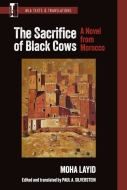
The Sacrifice of Black Cows
An oasis community in Morocco hopes to stop a devastating drought by sacrificing black cows to satisfy the spirits. But the wise elder Bassou secretly plans a different solution: to sabotage the motorized pumps that have lowered the water table and nearly destroyed the subsistence farming and herding that support the local way of life. The young newlywed Yidir agrees to help him and eventually becomes a part of the broader fight for Moroccan independence from French colonial rule.
Portraying an indigenous community undergoing radical change, The Sacrifice of Black Cows reflects on notions of modernity and tradition, science and spirituality, free will and fate, and considers the moral obligations of individuals and community. First published in French in 1992, the novel received international acclaim and is regarded as the single best work about Amazigh culture in southeastern Morocco. It was adapted into the award-winning film Atash (Thirst) by the Moroccan director Saâd Chraïbi in 2000. Here, it is presented in a riveting new translation by Paul A. Silverstein.
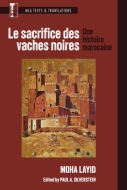
Le sacrifice des vaches noires
An oasis community in Morocco hopes to stop a devastating drought by sacrificing black cows to satisfy the spirits. But the wise elder Bassou secretly plans a different solution: to sabotage the motorized pumps that have lowered the water table and nearly destroyed the subsistence farming and herding that support the local way of life. The young newlywed Yidir agrees to help him and eventually becomes a part of the broader fight for Moroccan independence from French colonial rule.
Portraying an indigenous community undergoing radical change, Le sacrifice de vaches noires reflects on notions of modernity and tradition, science and spirituality, free will and fate, and considers the moral obligations of individuals and community. First published in French in 1992, the novel received international acclaim and is regarded as the single best work about Amazigh culture in southeastern Morocco. It was adapted into the award-winning film Atash (Thirst) by the Moroccan director Saâd Chraïbi in 2000.
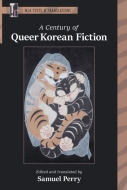
A Century of Queer Korean Fiction
Following decades of LGBTQ+ activism, South Korea has seen a flowering of queer literature, film, and Internet culture. Many openly gay, lesbian, transgender, and other queer Korean writers find themselves in the national and international spotlight. But the rich variety of queer representation also extends into the Korean past, as this volume illustrates.
Beginning with contemporary works of fiction by Kim Bi, Sang Young Park, and Yi Seoyoung and reaching back through the last century, this collection includes works by the canonical authors Yi Kwangsu, Yi Kiyŏng, Ch'oe Chŏnghŭi, and O Chŏnghŭi as well as stories by Yu Sŭngjin and Kim Sunyŏng that have been recovered from archives. The introduction places these representations of queerness in their historical and cultural context, explores the sometimes problematic norms found in the stories, and considers the potential these texts hold for destabilizing binaries of sex and gender.
Han’guk ŭi k’wiŏ munhak
Following decades of LGBTQ+ activism, South Korea has seen a flowering of queer literature, film, and Internet culture. Many openly gay, lesbian, transgender, and other queer Korean writers find themselves in the national and international spotlight. But the rich variety of queer representation also extends into the Korean past, as this volume illustrates.
Beginning with contemporary works of fiction by Kim Bi, Sang Young Park, and Yi Seoyoung and reaching back through the last century, this collection includes works by the canonical authors Yi Kwangsu, Yi Kiyŏng, Ch'oe Chŏnghŭi, and O Chŏnghŭi as well as stories by Yu Sŭngjin and Kim Sunyŏng that have been recovered from archives. The introduction places these representations of queerness in their historical and cultural context, explores the sometimes problematic norms found in the stories, and considers the potential these texts hold for destabilizing binaries of sex and gender.
The e-book edition of this title is available from Barnes and Noble and Apple. It is not available from Amazon.
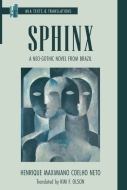
Sphinx
At his boardinghouse in Rio de Janeiro, the Englishman James Marian is seen as handsome but eccentric. Then another boarder learns Marian's secret: a fusion of a female head and a male body, Marian is the creation of a surgeon with occult powers. Despite his wealth and mysterious abilities, Marian is unable to live fully as either a man or a woman, traveling the world in order to repress his sexual desire and withdraw from society.
Sphinx explores the binaries of science and magic, body and spirit, male and female, attraction and horror, presenting its sexually ambiguous protagonist with sympathy. Ornately descriptive, this 1908 neo-gothic novel exemplifies the era's taste for the sensual and the fantastic. With echoes of Mary Shelley's Frankenstein, it stands as a classic of Brazilian science fiction.
Esfinge
At his boardinghouse in Rio de Janeiro, the Englishman James Marian is seen as handsome but eccentric. Then another boarder learns Marian's secret: a fusion of a female head and a male body, Marian is the creation of a surgeon with occult powers. Despite his wealth and mysterious abilities, Marian is unable to live fully as either a man or a woman, traveling the world in order to repress his sexual desire and withdraw from society.
Esfinge explores the binaries of science and magic, body and spirit, male and female, attraction and horror, presenting its sexually ambiguous protagonist with sympathy. Ornately descriptive, this 1908 neo-gothic novel exemplifies the era's taste for the sensual and the fantastic. With echoes of Mary Shelley's Frankenstein, it stands as a classic of Brazilian science fiction.
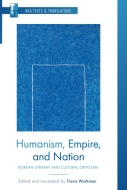
Humanism, Empire, and Nation
Faced with dramatic social and political changes, Korean writers of the twentieth century—writing in the context of Japanese imperialism, World War II, the Korean War, and the Cold War era—explored many pressing questions about modern life: What is the relationship between literature and society? How can intellectual concepts be used politically, for good or ill? What are the differences between Eastern and Western cultures?
The essays in this collection, originally published between 1933 and 1957, explore these and other questions through varying lenses, including liberal humanism, socialism, fascism, and an early form of North Korea's Juche thought. Featuring works by Paik Ch'ŏl, Sŏ Insik, Ŏm Hosŏk, and Ch'oe Chaesŏ, the volume highlights the diversity of twentieth-century Korean thought, its developments during periods of upheaval, and its engagement with ideas of modernity that were being shared around the world.
Hyumŏnijŭm, cheguk, minjok
Faced with dramatic social and political changes, Korean writers of the twentieth century—writing in the context of Japanese imperialism, World War II, the Korean War, and the Cold War era—explored many pressing questions about modern life: What is the relationship between literature and society? How can intellectual concepts be used politically, for good or ill? What are the differences between Eastern and Western cultures?
The essays in this collection, originally published between 1933 and 1957, explore these and other questions through varying lenses, including liberal humanism, socialism, fascism, and an early form of North Korea's Juche thought. Featuring works by Paik Ch'ŏl, Sŏ Insik, Ŏm Hosŏk, and Ch'oe Chaesŏ, the volume highlights the diversity of twentieth-century Korean thought, its developments during periods of upheaval, and its engagement with ideas of modernity that were being shared around the world.
The e-book edition of this title is available from Barnes and Noble and Apple. It is not available from Amazon.
