MLA Texts and Translations
There are 80 products in MLA Texts and Translations
Personality Disorders and Other Stories
The stories of Juan José Millás, who began writing in the 1970s, depart from both the socially engaged, traditional realism and the linguistic experimentation of post-Francoist Spain. They are populated by strange characters: a man who discovers a passage that connects all the armoires on earth, a woman who finds her obsessions to be better company than her cats, a vacationer who prefers his pancreas to the Bahamas as a destination. Influenced by both Gabriel García Márquez and Franz Kafka and resonant with Freudian concepts, Millás’s fiction—ironic, humorous, dreamlike—raises questions about identity, society, and what is normal.
In her introduction, Pepa Anastasio places Millás in the context of modern Spain and provides commentary on the style and themes of a contemporary writer little of whose work has yet appeared in English translation.
Trastornos de carácter y otros cuentos
The stories of Juan José Millás, who began writing in the 1970s, depart from both the socially engaged, traditional realism and the linguistic experimentation of post-Francoist Spain. They are populated by strange characters: a man who discovers a passage that connects all the armoires on earth, a woman who finds her obsessions to be better company than her cats, a vacationer who prefers his pancreas to the Bahamas as a destination. Influenced by both Gabriel García Márquez and Franz Kafka and resonant with Freudian concepts, Millás’s fiction—ironic, humorous, dreamlike—raises questions about identity, society, and what is normal.
In her introduction, Pepa Anastasio places Millás in the context of modern Spain and provides commentary on the style and themes of a contemporary writer little of whose work has yet appeared in English translation.
An Anthology of Spanish American Modernismo
The poetic movement that was Spanish American modernismo ran from the early 1880s to 1916: it expressed the desire both to join universal literature—aesthetic modernity—and to break colonial ties with Spanish belles lettres. The new translations in this bilingual anthology, many of them first translations, present eighteen modernista poets from Argentina, Bolivia, Colombia, Cuba, Mexico, Nicaragua, Peru, and Uruguay. This volume in the MLA series Texts and Translations is designed to provide the student of Spanish American literature with work not easily accessible in Spanish and English and to introduce modernismo, an often misunderstood movement, to a wider audience.
Kelly Washbourne teaches translation at Kent State University and translates from Spanish and Portuguese. He recently published José Asunción Silva’s After-Dinner Conversation. Sergio Waisman, associate professor of Spanish at George Washington University, translates Latin American literature and is the author of Borges and Translation: The Irreverence of the Periphery.
Three Women
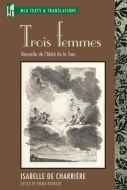
In the aftermath of the French Revolution, three women who have fled France—the straitlaced aristocrat Emilie, her lighthearted maid Joséphine, and the worldly Constance—try to make new lives for themselves in Altendorf, Germany. Their experiences, difficulties, and choices address the philosophical question, Are moral theories adequate guides to good conduct?
In her introduction to this late-eighteenth-century novel by Charrière, Emma Rooksby discusses the sentimental tradition, Enlightenment ideas, epistolary fiction, Charrière’s career, and the difficult situation of women and women writers in postrevolutionary France.
Isabelle de Charrière, born in 1740 to a Dutch aristocratic family, wrote several novels critical of rigid social conventions. She lived most of her life in Switzerland.
Trois femmes
In the aftermath of the French Revolution, three women who have fled France—the straitlaced aristocrat Emilie, her lighthearted maid Joséphine, and the worldly Constance—try to make new lives for themselves in Altendorf, Germany. Their experiences, difficulties, and choices address the philosophical question, Are moral theories adequate guides to good conduct?
In her introduction to this late-eighteenth-century novel by Charrière, Emma Rooksby discusses the sentimental tradition, Enlightenment ideas, epistolary fiction, Charrière’s career, and the difficult situation of women and women writers in postrevolutionary France.
Isabelle de Charrière, born in 1740 to a Dutch aristocratic family, wrote several novels critical of rigid social conventions. She lived most of her life in Switzerland.
Letter to My Mother
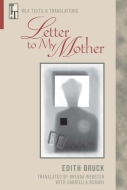
Through literary works and public appearances, Edith Bruck, born 1932 in Hungary, has devoted her life to bearing witness to what she experienced in the Nazi concentration camps. In 1954 she settled in Rome and is today the most prolific writer of Holocaust narrative in Italian. The book is composed in two parts. “Letter to My Mother”—an imaginary dialogue between Bruck and her mother, who died in Auschwitz—probes the question of self-identity, the pain of loss and displacement, the power of language to help recover the past, and the ultimate impossibility of that recovery. “Traces,” a story of a journey without return, completes the diptych. Bruck’s experimental fusion of memoir and fiction portrays the Holocaust from a female perspective and highlights the role of gender in the creation of memory.
Lettera alla madre
Through literary works and public appearances, Edith Bruck, born 1932 in Hungary, has devoted her life to bearing witness to what she experienced in the Nazi concentration camps. In 1954 she settled in Rome and is today the most prolific writer of Holocaust narrative in Italian. The book is composed in two parts. “Letter to My Mother”—an imaginary dialogue between Bruck and her mother, who died in Auschwitz—probes the question of self-identity, the pain of loss and displacement, the power of language to help recover the past, and the ultimate impossibility of that recovery. “Traces,” a story of a journey without return, completes the diptych. Bruck’s experimental fusion of memoir and fiction portrays the Holocaust from a female perspective and highlights the role of gender in the creation of memory.
Beauty and Love
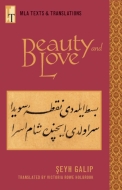
The girl Beauty and the boy Love are betrothed to each other as children. But Beauty violates the custom of the tribe by falling in love with him, and Love must undergo the trials of a journey to the Land of the Heart to prove himself worthy—a journey to realization of both his and Beauty’s true nature.
The Turkish verse romance Beauty and Love, written in 1783 by Şeyh Galip, head of an Istanbul center of Rumi’s order of the Whirling Dervishes, is an innovative interpretation of the Islamic love tale as a story of the action of God’s qualities in the world. With its stunning imagery, fast-moving plot, and nonchalant, erudite humor, it is widely known as the greatest work of Ottoman literature.
In her introduction Victoria Rowe Holbrook discusses the heritage of Ibn Arabi and Rumi in Ottoman thought, the traditions of verse romance and allegory, Indian style imagery, and Galip’s political loyalties.
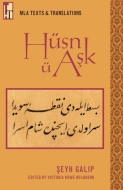
Hüsn ü Aşk
The girl Hüsn and the boy Aşk are betrothed to each other as children. But Hüsn violates the custom of the tribe by falling in love with him, and Aşk must undergo the trials of a journey to Diyar-i-Kalp, the Land of the Heart, to prove himself worthy—a journey to realization of both his and Hüsn’s true nature.
The Turkish verse romance Hüsn ü Aşk, written in 1783 by Şeyh Galip, head of an Istanbul center of Rumi’s order of the Whirling Dervishes, is an innovative interpretation of the Islamic love tale as a story of the action of God’s qualities in the world. With its stunning imagery, fast-moving plot, and nonchalant, erudite humor, it is widely known as the greatest work of Ottoman literature.
In her introduction Victoria Rowe Holbrook discusses the heritage of Ibn Arabi and Rumi in Ottoman thought, the traditions of verse romance and allegory, Indian style imagery, and Galip’s political loyalties.
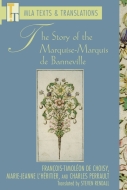
The Story of the Marquise-Marquis de Banneville
The beautiful Marquise de Banneville meets a handsome marquis, and they fall in love. But the young woman is actually a young man (brought up as a girl and completely in the dark about her—or his—true sex), while the marquis is actually a young woman who likes to cross-dress. Will they live happily ever after?
In the introduction, Joan DeJean presents the fascinating puzzle of authorship of this lighthearted gender-bending tale written in the late seventeenth century in France.
