MLA Texts and Translations
There are 80 products in MLA Texts and Translations
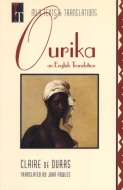
Ourika: An English Translation
John Fowles presents a remarkable translation of a nineteenth-century work that provided the seed for his acclaimed novel The French Lieutenant’s Woman and that will astonish and haunt modern readers.
Based on a true story, Claire de Duras’s Ourika relates the experiences of a Senegalese girl who is rescued from slavery and raised by an aristocratic French family during the time of the French Revolution. Brought up in a household of learning and privilege, she is unaware of her difference until she overhears a conversation that suddenly makes her conscious of her race—and of the prejudice it arouses. From this point on, Ourika lives her life not as a French woman but as a black woman who feels “cut off from the entire human race.” As the Reign of Terror threatens her and her adoptive family, Ourika struggles with her unusual position as an educated African woman in eighteenth-century Europe.
A best-seller in the 1820s, Ourika captured the attention of Duras’s peers, including Stendhal, and became the subject of four contemporary plays. The work represents a number of firsts: the first novel set in Europe to have a black heroine; the first French literary work narrated by a black female protagonist; and, as Fowles points out in the foreword to his translation, “the first serious attempt by a white novelist to enter a black mind.”
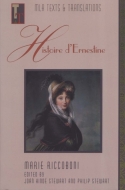
Histoire d’Ernestine
Set in prerevolutionary France, Histoire d’Ernestine tells of the love between an innocent young woman and an aristocrat. Ernestine, German-born and orphaned, is an apprentice painter putting the finishing touches on a portrait when the marquis de Clémengis, elegant and handsome, enters the studio. Recognizing him as the subject of the portrait, she gestures for him to be seated and goes on working, looking back and forth between him and his likeness. The world-weary aristocrat is smitten.
In graceful, understated prose, Marie Riccoboni shows how her heroine learns to negotiate questions of honor and appearances and to find a precarious balance between economic security and the potentially compromising nature of male generosity. The story raises questions about sexual enlightenment and social prejudice and reexamines the links of money, reputation, and marriageability that preoccupied eighteenth-century writers.
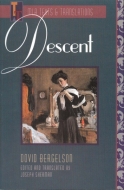
Descent
Descent, a novella published in 1920, is set against the background of Jewish life in Russia and Ukraine during the turbulent period leading up to the October Revolution of 1917, a period characterized by the rise of secularism, the rejection of old traditions, the alienation of intellectuals, and the attempt of different generations to find a place for themselves inside and out of the shtetl.
The novella centers on the mystery of the suicide of a young pharmacist in Rakitne, a provincial town. Did his death have anything to do with the two women who loved him? Was it the result of despair or an act of protest? And if protest, against what? His old friend seeks answers but finds none. The prose is immaculately crafted, the narrative indirect, and the mood poignant, dark, and disquieting.
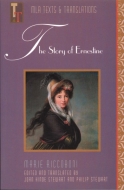
The Story of Ernestine
Set in prerevolutionary France, The Story of Ernestine tells of the love between an innocent young woman and an aristocrat. Ernestine, German-born and orphaned, is an apprentice painter putting the finishing touches on a portrait when the marquis de Clémengis, elegant and handsome, enters the studio. Recognizing him as the subject of the portrait, she gestures for him to be seated and goes on working, looking back and forth between him and his likeness. The world-weary aristocrat is smitten.
In graceful, understated prose, Marie Riccoboni shows how her heroine learns to negotiate questions of honor and appearances and to find a precarious balance between economic security and the potentially compromising nature of male generosity. The story raises questions about sexual enlightenment and social prejudice and reexamines the links of money, reputation, and marriageability that preoccupied eighteenth-century writers.
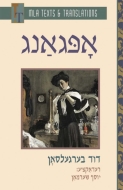
Opgang
Opgang, a novella published in 1920, is set against the background of Jewish life in Russia and Ukraine during the turbulent period leading up to the October Revolution of 1917, a period characterized by the rise of secularism, the rejection of old traditions, the alienation of intellectuals, and the attempt of different generations to find a place for themselves inside and out of the shtetl.
The novella centers on the mystery of the suicide of a young pharmacist in Rakitne, a provincial town. Did his death have anything to do with the two women who loved him? Was it the result of despair or an act of protest? And if protest, against what? His old friend seeks answers but finds none. The prose is immaculately crafted, the narrative indirect, and the mood poignant, dark, and disquieting.
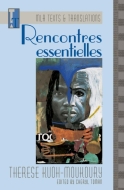
Rencontres essentielles
Published in 1969, Rencontres essentielles is the first novel by a woman of sub-Saharan francophone Africa. Thérèse Kuoh-Moukoury, of Cameroon, wrote it “to inspire other women to write.” Its story of love, infertility, a failed marriage, and adultery looks at both interpersonal connections and national politics from a feminist perspective.
In the introduction the volume editor, Cheryl Toman, provides valuable background with a discussion of African matriarchy, past and present; ethnic groups in Cameroon; interracial relationships; and polygamy as it affects women’s roles in the family and their interaction with one another.
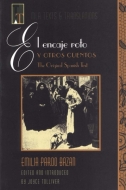
“El encaje roto” y otros cuentos
Although written a century ago, the sixteen stories by Emilia Pardo Bazán collected in this volume are strikingly relevant to contemporary concerns. Noted for narrative complexity, stylistic variety, and feminist themes, Pardo Bazán’s stories explore many aspects of the relationships between men and women.
Readers of these stories will encounter memorable and affecting characters. A mysterious nun spends her days in a convent crying over something that happened to her many years ago, when she was a young woman. A young man tries to uncover the true reason a scheming woman married his uncle. An unwed pregnant woman finds unexpected help from a misogynist doctor. A bachelor wishing to marry develops a special test for prospective wives, only to see it backfire. And in the title story, a bride suddenly calls off her wedding at the last possible moment without an explanation.
Both outspoken and witty, melancholy and humorous, these stories will interest general readers as well as students and scholars of Spanish literature.
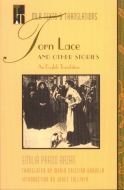
“Torn Lace” and Other Stories
Although written a century ago, the sixteen stories by Emilia Pardo Bazán collected in this volume are strikingly relevant to contemporary concerns. Noted for narrative complexity, stylistic variety, and feminist themes, Pardo Bazán’s stories explore many aspects of the relationships between men and women.
Readers of these stories, most of which are here translated into English for the first time, will encounter memorable and affecting characters. A mysterious nun spends her days in a convent crying over something that happened to her many years ago, when she was a young woman. A young man tries to uncover the true reason a scheming woman married his uncle. An unwed pregnant woman finds unexpected help from a misogynist doctor. A bachelor wishing to marry develops a special test for prospective wives, only to see it backfire. And in the title story, a bride suddenly calls off her wedding at the last possible moment without an explanation.
Both outspoken and witty, melancholy and humorous, these stories will interest general readers as well as students and scholars of Spanish literature.
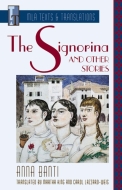
“The Signorina” and Other Stories
Greatly influenced by writers ranging from Dickens and Proust to Woolf and Colette, Anna Banti was a prominent figure on the Italian literary scene from the 1940s until her death in 1985. The five tales in “The Signorina” and Other Stories display her talent across many genres—fiction, science fiction, historical fiction, mystery.
Banti’s stories portray the ageless conflict between the expectations of society and the aspirations of the individual. In “Uncertain Vocations,” the young Ofelia becomes a pianist after her marriage prospects fail, but self-doubt turns her success into miserable mediocrity. In the futuristic “The Women Are Dying,” men acquire a new evolutionary ability; women, lacking that ability, are consigned to the status of an inferior race. “Joveta of Betania,” set in the time of the Crusades, follows the daughter of King Baldwin II of Jerusalem as she escapes to a life of seclusion as an abbess—a life that becomes for her a source of proud freedom and deep bitterness. In “Sailing Ships,” a young boy creates an imaginary world from an uncertain childhood memory. “The Signorina” tells of a young woman who eventually finds herself, as a writer.
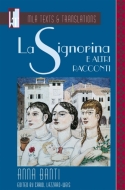
“La signorina” e altri racconti
Greatly influenced by writers ranging from Dickens and Proust to Woolf and Colette, Anna Banti was a prominent figure on the Italian literary scene from the 1940s until her death in 1985. The five tales in “La signorina” e altri racconti display her talent across many genres—fiction, science fiction, historical fiction, mystery.
Banti’s stories portray the ageless conflict between the expectations of society and the aspirations of the individual. In “Vocazioni indistinte,” the young Ofelia becomes a pianist after her marriage prospects fail, but self-doubt turns her success into miserable mediocrity. In the futuristic “Le donne muoiono,” men acquire a new evolutionary ability; women, lacking that ability, are consigned to the status of an inferior race. “Joveta di Betania,” set in the time of the Crusades, follows the daughter of King Baldwin II of Jerusalem as she escapes to a life of seclusion as an abbess—a life that becomes for her a source of proud freedom and deep bitterness. In “I velieri,” a young boy creates an imaginary world from an uncertain childhood memory. “La signorina” tells of a young woman who eventually finds herself, as a writer.
