MLA Texts and Translations
There are 80 products in MLA Texts and Translations
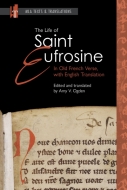
The Life of Saint Eufrosine: In Old French Verse, with English Translation
As a young woman from a wealthy family, Eufrosine was expected to marry a nobleman. Instead, she wanted to serve God. So she cut her hair, dressed as a man, and traveled to a monastery, becoming a monk named Emerald.
Adapted from a Latin source, this saint’s life dates to about 1200 CE. Devout yet erotic, lyrical yet didactic, it blends hagiography with romance and epic in order to engage and inspire a broad audience. The tale invites readers to rethink preconceived notions of the Middle Ages, the relation between spiritual and secular values, and ideas about the history of sexuality, identity, and family.
Only fragments of the poem have been previously translated. This edition includes the first full translation alongside the Old French original as well as a glossary and other supporting material.
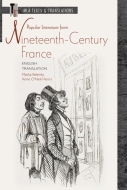
Popular Literature from Nineteenth-Century France: English Translation
The city of Paris experienced rapid transformation in the middle of the nineteenth century: the population grew, industry and commerce increased, and barriers between social classes diminished. Innovations in printing and distribution gave rise to new mass-market genres: literary guidebooks known as tableaux de Paris and illustrated physiologies examined urban social types and fashions for a broad audience of Parisians hungry to explore and understand their changing society. The works in this volume offer a lively, humorous tour of the manners and characters of the flâneur (a leisurely wanderer), the grisette (a young working-class woman), the gamin (a street urchin), and more. While authors such as Paul de Kock are little known today, their works still open a window onto a vivid time and place.
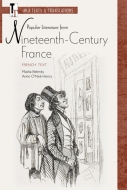
Popular Literature from Nineteenth-Century France: French Text
The city of Paris experienced rapid transformation in the middle of the nineteenth century: the population grew, industry and commerce increased, and barriers between social classes diminished. Innovations in printing and distribution gave rise to new mass-market genres: literary guidebooks known as tableaux de Paris and illustrated physiologies examined urban social types and fashions for a broad audience of Parisians hungry to explore and understand their changing society. The works in this volume offer a lively, humorous tour of the manners and characters of the flâneur (a leisurely wanderer), the grisette (a young working-class woman), the gamin (a street urchin), and more. While authors such as Paul de Kock are little known today, their works still open a window onto a vivid time and place.
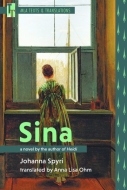
Sina: A Novel by the Author of Heidi
Johanna Spyri, best known for her iconic Heidi, sends another young heroine into the world, this time to face the challenges of adulthood and professional life. Sina Normann leaves her close-knit Alpine community to become one of the first women to attend medical school at the University of Zürich. Along her chosen path she must confront her family’s fears, her instructors’ prejudices, and the demands of her own heart. Published not long after women were first admitted to the University of Zürich, the novel is one of the first works in German to present female students seriously rather than as objects of humor. In her introduction, Anna Lisa Ohm argues that Sina may have been intended as a sequel to Heidi.
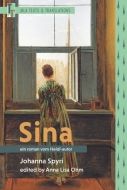
Sina: Ein Roman vom Heidi-Autor
Johanna Spyri, best known for her iconic Heidi, sends another young heroine into the world, this time to face the challenges of adulthood and professional life. Sina Normann leaves her close-knit Alpine community to become one of the first women to attend medical school at the University of Zürich. Along her chosen path she must confront her family’s fears, her instructors’ prejudices, and the demands of her own heart. Published not long after women were first admitted to the University of Zürich, the novel is one of the first works in German to present female students seriously rather than as objects of humor. In her introduction, Anna Lisa Ohm argues that Sina may have been intended as a sequel to Heidi.

Selected Poetry and Prose of Évariste Parny: In English Translation, with French Text
Praised by Voltaire and admired by Pushkin, Évariste Parny (1753–1814) was born on the island of Reunion, which is east of Madagascar, and educated in France. His life as a soldier and government administrator allowed him to travel to Brazil, Africa, and India. Though from the periphery of France’s colonial empire, he ultimately became a member of the Académie Française. Despite his reaching that pinnacle of respectability, some of his poetry was banned after his death.
This edition includes poems from the Poésies érotiques and Élégies, which established Parny’s reputation; the Chansons madécasses (“Madagascar Songs”), which were influential in the development of the prose poem; five of his published letters, written in a mixture of prose and verse; the narrative poem Le voyage de Céline; and selections from his sardonic, anticlerical later poetry. A substantial introduction discusses Parny’s poetry in connection with its literary context and the themes of gender, race, and postcoloniality.
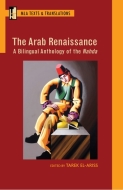
The Arab Renaissance: A Bilingual Anthology of the Nahda
The Nahda (“awakening”) designates the project of Arab cultural and political modernity from the early nineteenth to the early twentieth century. Arab models of nationalism and secularism, as well as Islamic revival, spring from Nahda thought and its attendant developments, such as linguistic reform; translation; the emergence of new literary genres, such as the novel; the creation of periodicals, journalism, and a new publishing industry; professional associations and salons; a new education system; and an overall Enlightenment ideal of knowledge. The Nahda ushered in innovative modes of reading and writing along with new social practices of knowledge transmission, transnational connections, and new political ideas.
Collected in this anthology are texts by intellectuals, writers, members of the clergy, and political figures. The authors discuss authority, social norms, conventions and practices both secular and religious, gender roles, class, travel, and technology. Presented in the original Arabic and in English translation, the texts will be of interest to students of the Arabic language and culture, history, cultural studies, gender studies, and other disciplines.
A list of errata for printings made up to and including the third printing is available.
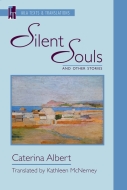
“Silent Souls” and Other Stories
Two additional texts by Caterina Albert, with translations by Kathleen McNerney, are available online for free.
Caterina Albert i Paradís (1869–1966) began her career with a scandal. Her dramatic monologue “The Infanticide” won prizes and garnered the attention of the Catalan literary world, but its harsh theme drew outrage when the anonymous author was revealed to be a woman. She continued to write unflinching narratives, mostly in Catalan, of the people and life around her, producing a body of work still enlisted today to help the Catalan language resist the dominance of Peninsular Spanish.
Albert shares with her contemporaries Anton Chekhov and Emilia Pardo Bazán an intense interest in the psychological development of characters and in narrative strategies, and the short stories collected here highlight her range of style and grasp of human nature. Kathleen McNerney’s introduction contextualizes Albert’s themes, feminism, and formal techniques as well as recent Catalan political and literary history.
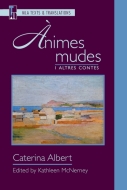
“Ànimes mudes” i altres contes
Two additional texts by Caterina Albert, with translations by Kathleen McNerney, are available online for free.
Caterina Albert i Paradís (1869–1966) began her career with a scandal. Her dramatic monologue “The Infanticide” won prizes and garnered the attention of the Catalan literary world, but its harsh theme drew outrage when the anonymous author was revealed to be a woman. She continued to write unflinching narratives, mostly in Catalan, of the people and life around her, producing a body of work still enlisted today to help the Catalan language resist the dominance of Peninsular Spanish.
Albert shares with her contemporaries Anton Chekhov and Emilia Pardo Bazán an intense interest in the psychological development of characters and in narrative strategies, and the short stories collected here highlight her range of style and grasp of human nature. Kathleen McNerney’s introduction contextualizes Albert’s themes, feminism, and formal techniques as well as recent Catalan political and literary history.
![[Don Kikhot]: A Dramatic Adaptation Cover](https://cc-mla-storage.s3.amazonaws.com/master/images/_aliases/listitem/6/8/3/6/1316386-1-eng-US/9781603291491.jpg)
Дон Кихот [Don Kikhot]: A Dramatic Adaptation
When Soviet censors approved Mikhail Bulgakov’s Дон Кихот, a stage adaptation of Don Quixote, they were unaware that they were sanctioning a subtle but powerful criticism of Stalinist rule. The author, whose novel Мастер и Маргарита would eventually bring him world renown, achieved this sleight of hand through a deft interpretation of Cervantes’s knight. Bulgakov’s Don Quixote fits comfortably into the nineteenth-century Russian tradition of idealistic, troubled intellectuals, but Quixote’s quest becomes an allegory of the artist under the strictures of Stalin’s regime. Bulgakov did not live to see the play performed: it went into production in 1940, only months after his death.
The volume’s introduction provides background for Bulgakov’s adaptation and compares Bulgakov with Cervantes and the twentieth-century Russian work with the seventeenth-century Spanish work.
