MLA Texts and Translations
There are 80 products in MLA Texts and Translations
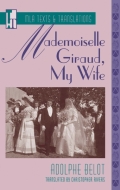
Mademoiselle Giraud, My Wife
Adolphe Belot was the envy of his contemporaries Émile Zola and Gustave Flaubert: his books, unlike theirs, were best-sellers. He specialized in popular fiction that provided readers with just the right mix of salaciousness and propriety. (Under the initials A. B. he dispensed entirely with propriety.)
The sensational Mademoiselle Giraud, My Wife (published in 1870 with a preface by Zola) tells of the suffering of a naive young man whose new bride will not agree to consummate the marriage. Eventually he learns from an acquaintance, to his amazement, that their wives are lovers. In the pitched battle between husband and wife, the sexes are evenly matched—until the end.
Christopher Rivers argues in his introduction that the protagonist’s homophobic attitude toward lesbianism is ironically linked to his intimate homosocial bonds with men. This example of commercial fiction, Rivers argues, reveals tensions in nineteenth-century French society not apparent in canonical works of high culture.
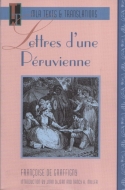
Lettres d’une Péruvienne
One of the most popular works of the eighteenth century, Lettres d’une Péruvienne appeared in more than 130 editions, reprints, and translations during the hundred years following its publication in 1747. In the novel the Inca princess Zilia is kidnapped by Spanish conquerors, captured by the French after a battle at sea, and taken to Europe. Graffigny’s brilliant novel offered a bold critique of French society, delivered one of the most vehement feminist protests in eighteenth-century literature, and announced—fourteen years before Rousseau’s Julie, or the New Eloise—the Romantic tradition in French literature.
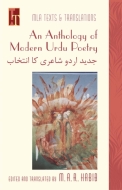
An Anthology of Modern Urdu Poetry
Currently spoken by almost 250 million people in Pakistan and India and the second most widely spoken language in Britain, Urdu has one of the richest literatures of all south Asian languages. The modern Urdu poets presented in this book offer a fascinating range of forms and styles that grew out of that tradition, as well as a complex commentary on the experience—personal, religious, cultural, political—of the issues and dilemmas of the twentieth century. In his introduction, M. A. R. Habib outlines the history of Urdu literature, identifies the major poets associated with the classical tradition, discusses some Western influences, and describes the formal genres of the poetry (the qasida, the masnavi, and the marisiya forms of the longer poems; the qit’a, the rubai, and the ghazal forms of the shorter poems). Together, the commentary and the poems in this volume provide an informed introduction to major modern trends in Urdu poetry.
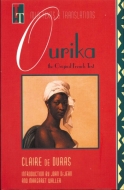
Ourika: The Original French Text
Based on a true story, Claire de Duras’s Ourika relates the experiences of a Senegalese girl who is rescued from slavery and raised by an aristocratic French family during the time of the French Revolution. Brought up in a household of learning and privilege, she is unaware of her difference until she overhears a conversation that suddenly makes her conscious of her race—and of the prejudice it arouses. From this point on, Ourika lives her life not as a French woman but as a black woman who feels “cut off from the entire human race.” As the Reign of Terror threatens her and her adoptive family, Ourika struggles with her unusual position as an educated African woman in eighteenth-century Europe.
A best-seller in the 1820s, Ourika captured the attention of Duras’s peers, including Stendhal, and became the subject of four contemporary plays. The work represents a number of firsts: the first novel set in Europe to have a black heroine; the first French literary work narrated by a black female protagonist; and, as John Fowles points out, “the first serious attempt by a white novelist to enter a black mind.”
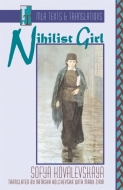
Nihilist Girl
First published in Switzerland in 1892, finally printed in Russia in 1906, and never before translated into English, Nihilist Girl is the coming-of-age story of Vera Barantsova, a young aristocrat who longs to devote her life to a cause. Her privileged world is radically changed by Alexander I’s emancipation of the serfs. Vera first hopes to follow in the footsteps of Christian martyrs, but a neighboring landowner—a liberal professor fired from his position at Saint Petersburg University and exiled to his estate—opens her eyes to the injustice in Russia.
A blend of social commentary and psychological observation, Nihilist Girl depicts the clash between a generation of youth who find their lives caught up by political action and a society unwilling to abandon its patriarchal traditions.
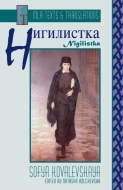
Nigilistka
First published in Switzerland in 1892, finally printed in Russia in 1906, and never before translated into English, Nigilistka is the coming-of-age story of Vera Barantsova, a young aristocrat who longs to devote her life to a cause. Her privileged world is radically changed by Alexander I’s emancipation of the serfs. Vera first hopes to follow in the footsteps of Christian martyrs, but a neighboring landowner—a liberal professor fired from his position at Saint Petersburg University and exiled to his estate—opens her eyes to the injustice in Russia.
A blend of social commentary and psychological observation, Nigilistka depicts the clash between a generation of youth who find their lives caught up by political action and a society unwilling to abandon its patriarchal traditions.
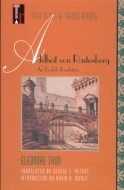
Adelheit von Rastenberg: An English Translation
When the knight Adelbert leaves his beloved Adelheit for the Crusades, her father arranges for her to marry the rich and powerful Robert von Rastenberg, whom she does not love. Several years later, while strolling through the forest, Adelheit encounters her former lover, who has returned to persuade her to run off with him. Torn between her love for Adelbert and her honor and duty as wife, Adelheit chooses to remain with Robert, but her manipulative stepson, Franz, hungry for his father’s love and his inheritance, conspires to trick Adelheit into fleeing—and precipitates a series of events that end in tragedy.
Purporting to chronicle historical events, Eleonore Thon’s play reveals more about the changing roles of women at the dawn of the Industrial Age than it does about knightly conduct in the German Middle Ages. Published in 1788 and translated here for the first time in English, Adelheit von Rastenberg will be of interest to students of German literature, comparative literature, women’s studies, and theater.
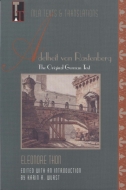
Adelheit von Rastenberg: The Original German Text
When the knight Adelbert leaves his beloved Adelheit for the Crusades, her father arranges for her to marry the rich and powerful Robert von Rastenberg, whom she does not love. Several years later, while strolling through the forest, Adelheit encounters her former lover, who has returned to persuade her to run off with him. Torn between her love for Adelbert and her honor and duty as wife, Adelheit chooses to remain with Robert, but her manipulative stepson, Franz, hungry for his father’s love and his inheritance, conspires to trick Adelheit into fleeing—and precipitates a series of events that end in tragedy.
Purporting to chronicle historical events, Eleonore Thon’s play reveals more about the changing roles of women at the dawn of the Industrial Age than it does about knightly conduct in the German Middle Ages. Published in 1788 and translated here for the first time in English, Adelheit von Rastenberg will be of interest to students of German literature, comparative literature, women’s studies, and theater.
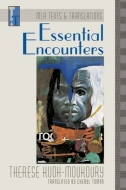
Essential Encounters
Published in 1969, Essential Encounters is the first novel by a woman of sub-Saharan francophone Africa. Thérèse Kuoh-Moukoury, of Cameroon, wrote it “to inspire other women to write.” Its story of love, infertility, a failed marriage, and adultery looks at both interpersonal connections and national politics from a feminist perspective.
In the introduction the volume editor, Cheryl Toman, provides valuable background with a discussion of African matriarchy, past and present; ethnic groups in Cameroon; interracial relationships; and polygamy as it affects women’s roles in the family and their interaction with one another.
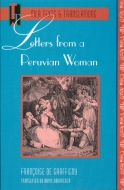
Letters from a Peruvian Woman
One of the most popular works of the eighteenth century, Letters from a Peruvian Woman appeared in more than 130 editions, reprints, and translations during the hundred years following its publication in 1747. In the novel the Inca princess Zilia is kidnapped by Spanish conquerors, captured by the French after a battle at sea, and taken to Europe. Graffigny’s brilliant novel offered a bold critique of French society, delivered one of the most vehement feminist protests in eighteenth-century literature, and announced—fourteen years before Rousseau’s Julie, or the New Eloise—the Romantic tradition in French literature. This edition is the first English translation in almost two hundred years.
