Lesser-Known MLA Fields
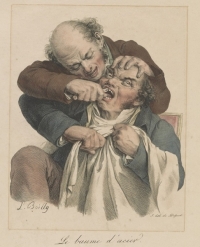
Dancing and Dentistry in Modern Language
A. Marshall Elliott of Johns Hopkins University lamented a number of absurdities related to the lack of modern language standardization at the MLA’s founding meeting in December 1883.
Elliott stated that he “knew of one place where a teacher had the title of ‘professor of French and dancing,’ and another where a course of study was called ‘lectures on French and the preservation of teeth.’” Elliott became the first executive director of the MLA and later went on to become its fourth president.
Simplified Spelling
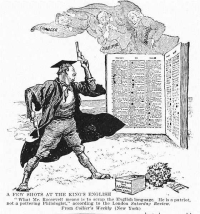

In 1913 Mr. E. O. Vaile, chairman of the Committee on Simplified Spelling, wrote to the MLA requesting support for simplified spelling, a shortened, phonetic variation of English orthography. Vaile hoped that the MLA’s endorsement and “potent influence” would inspire colleges and universities to adopt the spelling style. Endorsement and popularization would then sanction elementary schools to begin teaching the new spellings.
The MLA executed a survey, which concluded that while many respondents favored simplified spelling, the majority did “not approve the changes recommended to their full extent.” In 1918 the MLA officially abandoned the idea, two years before the Simplified Spelling Board dissolved.
International Auxiliary Language
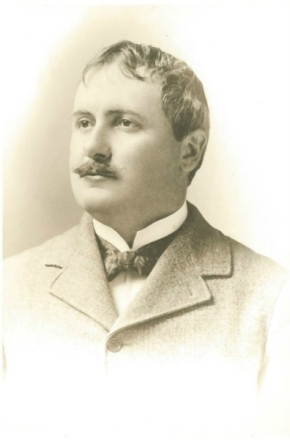
The MLA nominated Raymond Weeks, K. McKenzie, William A. Nitze, F. Klaeber, and Hermann Collitz to the Committee on International Auxiliary Languages. In Collitz’s presidential address at the annual convention of 1925 he described the idea behind the movement:
“At a time when nearly every nook and corner of the globe has been made accessible and when international relations are becoming from year to year more general and more intimate, it seems only natural that the idea of a universal language . . . should have been revived, so as to be hailed in many quarters with delight and enthusiasm.”
However, not everyone was as enthusiastic as Collitz. Former executive director Charles H. Grandgent (1902–11) declined the invitation to join the committee in 1920, saying, “[t]he subject interests me not one bit; indeed, I should be sorry to think that any act of mine had advanced that foolish and futile movement.”
Career Guidance
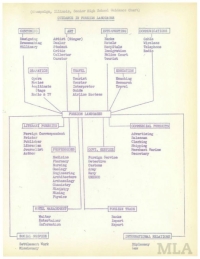
Foreign language education opens the doors to a trove of career opportunities. This high school guidance chart from 1952 outlines seventy-one career paths, included mining, detective work, millinery, and airline hostessing.